Dynamic Cogeneration: Generate a fix and a reproducing test together
Standalone L1 diagnostic,
adapter: null. Test validation and selection, not a Passerine generation agent. Full experiment too costly and not reproduced (review DONE).
Paper information
| Field | Details |
|---|---|
| Paper | arXiv 2601.19066; v1 Sections 3.2–3.3 |
| Institution | First author Runxiang Cheng: Google |
| First public release | 2026-01-27 01:02:57 UTC (arXiv v1; historical backfill) |
| Author code | No Passerine implementation found in reviewed paper or official listing. Input/reference repositories are not author code. |
| Local adapter or method key | dynamic-brt |
| Local reproduction code | src/auto_research/agent_research/google16_dynamic_brt.py |
Paper method and evidence
The fix and bug reproduction test (BRT) are generated in one trajectory; TDD, TLD and Freeform differ in order. A BRT fails on the bug and passes on the generated fix. Group by non-test patch so different tests do not split votes for the same fix; ranked favors a test within the majority group. This is not plausibleBRT, which also needs an isolated oracle fix. A generated fix agreeing with its own test is not proof of correctness. Section 3.
flowchart LR
  A[Fix and test trajectory] --> B[Run against bug and proposed fix]
  B[Run against bug and proposed fix] --> C[Group normalized patch votes]
  C[Group normalized patch votes] --> D[Select fix and test]
Original paper figure
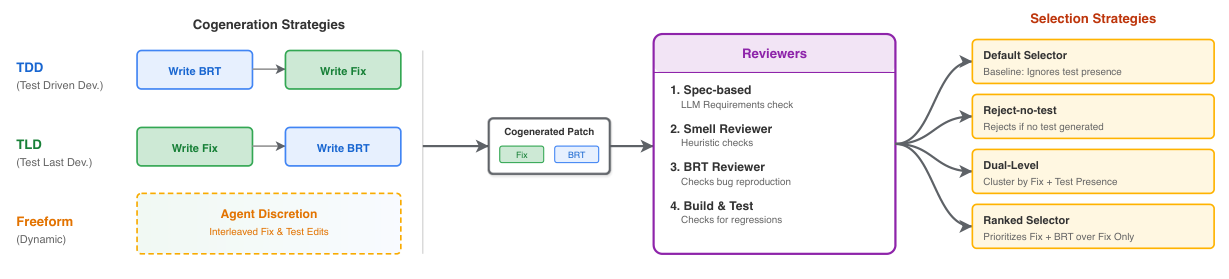
Figure 1 from v1 page 4 shows the larger workflow, not the limited local implementation. Screenshot provenance. From the original paper; copyright remains with the authors.
Core equation
Reported results
On 120 private Google bugs, best selector fix+BRT precision/recall is 0.16/0.71 vs default 0.08/0.57. Internal deployment is not quantified production A/B. Section 5.3.
Local reproduction
Eleven tests pass. A constructed increment example really launches separate Python processes and observes assertion_failed → passed. Tautologies, non-assertion exceptions and fixes failing regression do not qualify. Majority examples verify distinct ranked and dual selections. Diagnostic metrics.
execute_subset accepts AST-allowlisted public functions, limited integer arithmetic, conditionals and nonempty assertions; blocks imports, attributes, files/network/external processes, loops and exponentiation. Each pair runs in a new -I -S process with CPU 1s and wall 2s limits and process group cleanup; Linux also limits address space to 256 MiB, not claimed on Mac. Not a general malicious-code sandbox, and never runs downloaded repos. normalized_implementation keeps operators/constants and heuristically normalizes identifiers, not semantic equivalence. review_patch and reviewer do not receive gold; select_patch consumes reviewed results. No generator or spec/smell LLM review; semantic_reviewer_observed=false. A supplied callback is actually invoked and can reject. Fixtures are not Google benchmark, model capability or Evolve evidence.
The private monorepo and Gemini 2.5 Pro campaign is 5×120×20 trajectories up to 25 steps, roughly 300,000 configured agent steps (not measured local runtime). No complete single-GPU/Mac campaign or automatic retry.