POLCA: Generative program optimization with noisy evaluation histories
Standalone L0
component_only. Priority queue and genuine callback interfaces, not a measured LLM optimizer. Full experiment too costly and not reproduced (review DONE).
Paper information
| Field | Details |
|---|---|
| Paper | arXiv 2603.14769; v1 Section 3 / Algorithm 1 |
| Institution | First author Xuanfei Ren: University of Wisconsin–Madison; Google DeepMind / Google Research collaborators |
| First public release | 2026-03-16 03:07:44 UTC (arXiv v1) |
| Author code | Yes: pinned rlx-lab/POLCA. Setup points to Trace experimental; pinned epsilon-net/summarizer implementation verified beyond the README. |
| Local adapter or method key | polca |
| Local reproduction code | src/auto_research/agent_research/google16_polca.py |
Paper method and evidence
Stochastic minibatches, programs and evaluators create noisy scores. POLCA retains and updates histories instead of trusting one high score. A Summarizer builds global lessons; a Proposer consumes current feedback; an epsilon-net limits redundant semantic candidates. Keep empirical-mean priority separate from the theoretical UCB variant. Farthest-first filtering recomputes remaining distances after adding each item. Section 3.
flowchart LR
  A[Evaluate on shared minibatch] --> B[Accumulate noisy histories]
  B[Accumulate noisy histories] --> C[Summarize and propose]
  C[Summarize and propose] --> D[Filter by semantic epsilon]
  D[Filter by semantic epsilon] --> E[Evaluate within budget]
Original paper figure
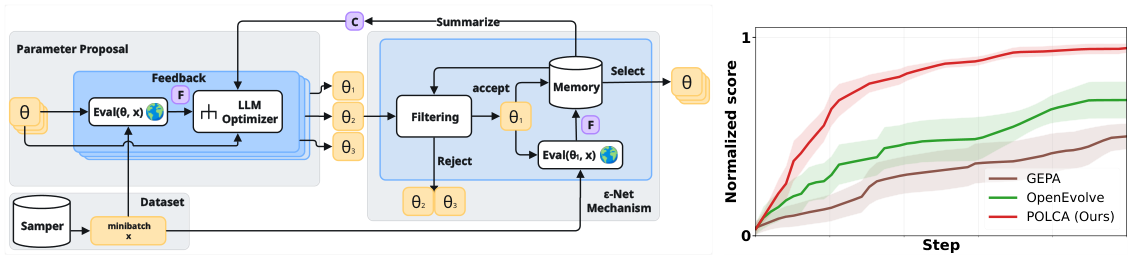
Figure 1, v1 page 2; curves are paper results. Screenshot provenance. From the original paper; copyright remains with the authors.
Core equation
Reported results
The paper compares sample/time efficiency and epsilon-net/Summarizer ablations on tau-bench, HotpotQA, VeriBench and KernelBench. Offline optimization, not production A/B; paper aggregate scores are not local metrics. Section 5.
Local reproduction
Six tests cover strict epsilon, mutual novelty, a shared with-replacement minibatch, cross-round noisy means and variances, full histories to callbacks, exhausted budgets and rejection of test split. Diagnostic record.
Polca.round requires evaluator, summarizer and proposer, with no canned LLM output. EvaluationResult(score, feedback, output) and Observation preserve actual inputs/outputs separately from feedback; inputs and outputs are deep-copied. Summarizer sees full memory, proposer sees selected history. Caller supplies real reward-independent embeddings; one-dimensional fixture coordinates test only distance. Completed observations survive later failures; metric calls count before invocation. Existing and new candidates share a batch; unevaluated proposals are deferred_budget, excluded from statistics. Defaults: 64 metric calls, 16 memories, 16 new proposals per round. Limits do not bound external callback hardware cost.
No API billing, download, CUDA or unified Evolve. Full multi-benchmark/baseline matrices with 3/6 seeds, up to 50 rounds per question and repeated optimizer/embedding calls exceed short single-card or Mac budget by configuration, not measured local cost. No automatic retries.