PASE: Evolve Skill Descriptions and Program Patches Separately
简体中文 · English
This CPU component implements patch transactions and validation admission, not a model proposer, generated-code executor or spreadsheet-solving agent.
Paper information
| Field | Details |
|---|---|
| Paper | Program-Aided Patchable Skill Evolution; reviewed v1 |
| Affiliation | First author Jiahao Wang: Northeastern University, Shenyang, China; collaborators at Alibaba; not the US namesake |
| First public release | 2026-11-10, 12:53:12 UTC |
| Authors' code | A future GitHub release is promised, but no URL or released author implementation was found |
| Local adapter | None (adapter: null); component key pase |
| Local code | src/auto_research/agent_research/pase.py |
Original paper summary
Background and main changes
Text-only skills entangle strategy and procedural details. PASE preserves descriptive knowledge while linking skills to independently editable programs. A proposed patch is kept only after held-out validation improvement. Program syntax alone establishes neither task correctness nor safety.
flowchart LR
    A[Skill description and linked program] --> B[Task trajectories]
    B --> C[Model proposes local patch]
    C --> D[Temporary skill-program candidate]
    D --> E[Held-out validation]
    E -->|Strict improvement| F[Accept paired update]
    E -->|Tie or decline| G[Keep original pair]
Key figure from the paper
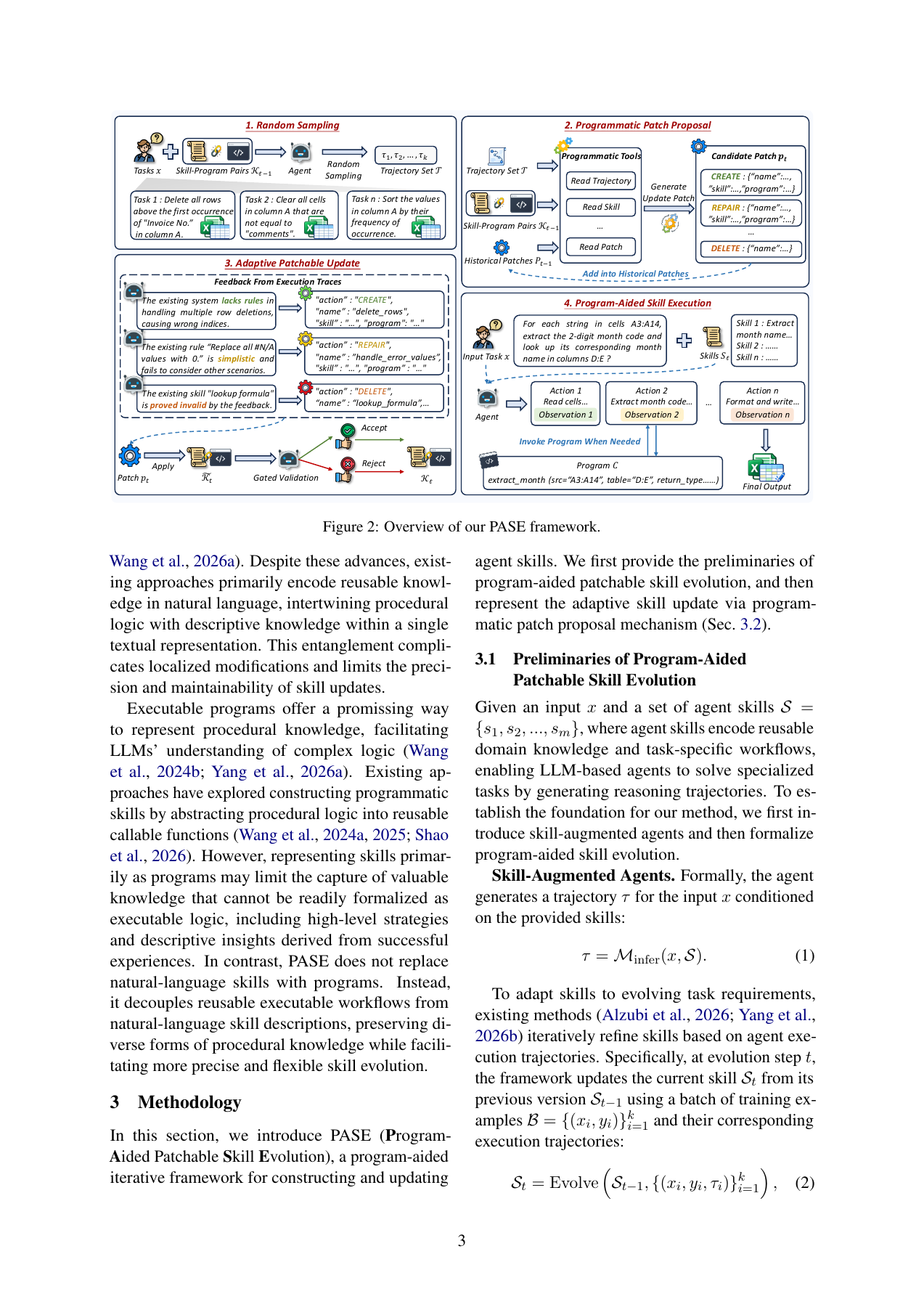
Figure 2, PDF page 3, from the original paper, © the original authors. Model patch generation and task execution are not reproduced locally. Image from the original paper; copyright belongs to its authors. Full-system or experimental results shown are not local component results.
Core equations
Keep skill-program pairs \(K=\{(s_i,c_i)\}\). Apply a patch to obtain \(\widetilde K_t=\operatorname{Apply}(p_t,K_{t-1})\), then retain it only if \(R_{val}(\widetilde K_t)>R_{val}(K_{t-1})\). Otherwise roll back. Test scores must not select patches, and AST parsing is not \(R_{val}\).
Paper results
The study covers SpreadsheetBench, Domain-Spreadsheet, WikiTQ and HiTab and examines cross-model transfer. Results depend on creator, user and benchmark. No production A/B test is reported; local code does not reproduce those gains.
Local implementation
Data contract and code mapping
ProgramSkill stores a description and linked source; AST parsing checks syntax but never executes it. ProgramPatch targets an ID and original SHA256, rejecting stale or misdirected edits. apply_validated_patch() consumes externally measured validation scores and returns a new immutable pair only for strict improvement. It has no stand-in actor or access to test answers.
PYTHONPATH=src python -c 'from auto_research.agent_research.pase import diagnostic; print(diagnostic(42))'
Results, controls and limits
CPU diagnostics labeled 42/43/44 accept one improving patch and roll back a tie and decline while preserving the original digest. Tests reject test-based selection, stale patches and invalid syntax. Even source containing raise is parsed, not executed. These checks establish transactions, not code safety, patch quality or spreadsheet accuracy. CUDA is rejected.
High-cost full experiment
The original study uses roughly 128K contexts, up to 50 ReAct iterations during evolution, ten rounds with batch eight, three independent runs, large 27B/31B or API backbones and four benchmarks. The full rollout grid is too costly and is not reproduced (review DONE). No weights, APIs or untrusted generated programs were run. Full skill-library CREATE/DELETE edits and model refinement are outside coverage.