FGSE: Falsify Before Committing Memory
简体中文 · English
This CPU empirical gate consumes paired external verifier records. It generates neither agents, probes nor answers; gate pass rates are not task-success rates.
Paper information
| Field | Details |
|---|---|
| Paper | When Should Agents Remember?; reviewed v1 |
| Affiliation | First author Runxuan Tang: Nanyang Technological University; collaborators at Georgia Tech, UW, WashU, Sydney and NUS |
| First public release | 2026-11-10, 16:52:25 UTC |
| Authors' code | No author repository linked in the fixed paper or found through exact-title search; not claimed open-source |
| Local adapter | None (adapter: null); component key fgse |
| Local code | src/auto_research/agent_research/fgse.py |
Original paper summary
Background and main changes
A locally useful update can harm boundary cases or old skills. FGSE represents a lesson as a hypothesis with precondition, behavior, expected effect and verifier. It evaluates a temporary state on transfer, targeted falsification and archived regression probes before committing, refining once, or rejecting it.
flowchart LR
    A[Execution evidence] --> B[Structured hypothesis]
    B --> C[Temporary state]
    C --> D[Transfer gain]
    C --> E[Falsification failures]
    C --> F[Regression damage]
    D --> G{All three gates pass}
    E --> G
    F --> G
    G -->|Yes| H[Persistent update]
    G -->|No| I[One refinement or rejection]
Key figure from the paper
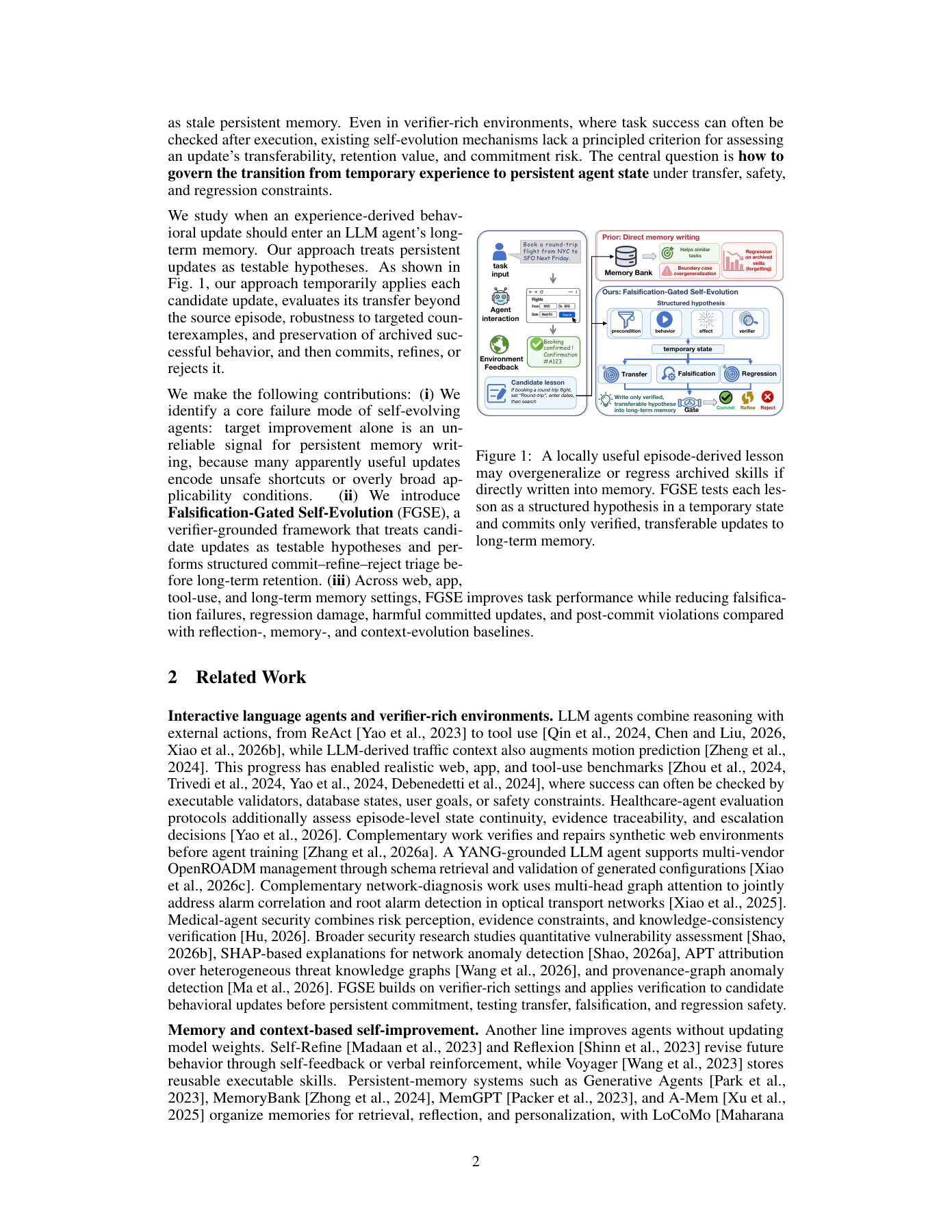
Figure 1, PDF page 2, from the original paper, © the original authors. Local coverage is limited to empirical statistics and admission. Image from the original paper; copyright belongs to its authors. Full-system or experimental results shown are not local component results.
Core equations
Let \(\Delta(x)=J(\Theta\oplus h,x)-J(\Theta,x)\). Compute \(G=\operatorname{mean}_T\Delta\), \(P=\operatorname{mean}_F\mathbf1[\Delta<-\epsilon\lor E=0]\) and \(D=\operatorname{mean}_R[-\Delta]_+\), each with its own denominator. Commit only if \(G\ge\eta\), \(P\le\delta\) and \(D\le\beta\). This empirical gate is not a local verification of the paper's confidence-bound theorem.
Paper results
The authors evaluate updates across web, app, tools, security and memory environments using frozen models and external verifiers. No production A/B test is reported. Those capability results are separate from the synthetic controls below.
Local implementation
Data contract and code mapping
Probe contains finite paired verifier scores in \([0,1]\) and a binary expected-effect flag, not a gold answer. commitment_gate() implements equations 7-9. Callers must obtain actual verifier records externally. There is no actor callback or fabricated execution behind supplied scores.
PYTHONPATH=src python -c 'from auto_research.agent_research.fgse import diagnostic; print(diagnostic(42))'
Results, controls and limits
CPU diagnostics labeled 42/43/44 admit a safe gain of 0.15. An effect failure rejects an update even without a score drop; regression damage near 0.20 blocks positive transfer; zero gain fails. Tests reject empty groups, NaN, infinity and invalid scores. These are formula and branch controls, not stable model improvements. CUDA is rejected.
High-cost full experiment
Appendix C.7 totals approximately 460,000 LLM and 703,000 verifier calls, with up to 32 CPU workers and individual groups taking 12-39 hours. Provider-side serving compute is undisclosed, not author-side GPU training. The full study is too costly and is not reproduced (review DONE). No proposer, probe generator, automatic refinement, persistent policy composition or complete environment loop was run.