ARE-bench: Research Delivery with Real History and Workspaces
简体中文 · English
This is a CPU input-separation and scorer protocol. The 75 official tasks are not integrated, no research agent was run, and hand-built checklists are not the official benchmark.
Paper information
| Field | Details |
|---|---|
| Paper | ARE-bench; reviewed v1 |
| Affiliation | First author Jiahang Lin: Fudan University and Shanghai AI Laboratory internship, checked against his homepage; paper affiliations are collective |
| First public release | 2026-11-10, 17:21:31 UTC; the PDF cover says November 11, so arXiv v1 governs publication |
| Authors' code | Project site offers contact-based evaluation; no public code/task download found or claimed integrated |
| Local adapter | None (adapter: null); interface key are-bench |
| Local code | src/auto_research/agent_research/are_bench.py |
Original paper summary
Background and main changes
Solving a standalone task in a clean directory differs from continuing research. ARE-bench replays the uncleaned workspace at a real session boundary and preserves earlier requirements still in effect. Actors see Background, Requirements, Environment and workspace, while evaluators retain the private rubric and provenance. An empty checklist is an error, not a perfect score.
flowchart LR
    A[Real session boundary] --> B[Background, requirements and environment]
    A --> C[Workspace replayed as-is]
    B --> D[Actor delivery]
    C --> D
    D --> E[Independent checklist judgment]
    F[Private rubric and provenance] --> E
    E --> G[Strict ISR and task-macro CSR]
Key figure from the paper
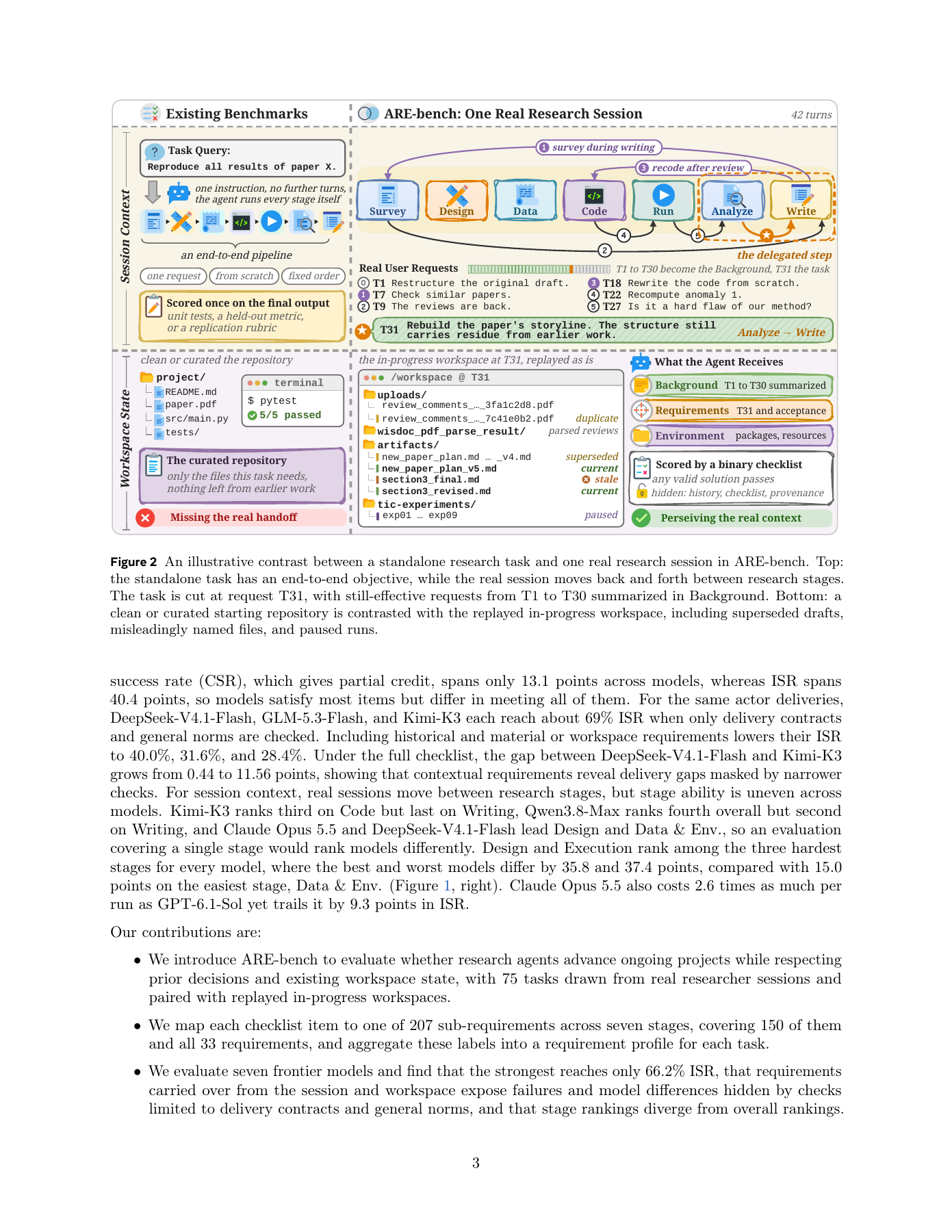
Figure 2, PDF page 3, from the original paper, © the original authors. No official task corpus was downloaded or recreated locally. Image from the original paper; copyright belongs to its authors. Full-system or experimental results shown are not local component results.
Core equations
For \(n_c>0\) binary decisions per task, \(ISR=N^{-1}\sum_c\mathbf1[\bigwedge_k r_{c,k}=1]\) and \(CSR=N^{-1}\sum_c(n_c^{-1}\sum_k r_{c,k})\). CSR is task-macro, not pooled item accuracy. Missing, duplicate or non-boolean decisions must not alter the denominator.
Paper results
The study contains 75 tasks, seven research stages and 1,173 checklist items. The strongest of seven models achieves approximately 66.2% strict ISR. Omitting historical and material requirements hides failures. No production A/B test is reported; local scorer examples are not model reruns.
Local implementation
Data contract and code mapping
TaskInput.actor_payload() exposes task context and workspace references, never rubric or gold-answer fields. ChecklistVerdict is evaluator-only input and checks the exact item-ID set and binary decisions. score() implements equations 6-7. It neither generates judge decisions nor reads private sessions or workspace files, and it does not clean task history.
PYTHONPATH=src python -c 'from auto_research.agent_research.are_bench import diagnostic; print(diagnostic(42))'
Results, controls and limits
Constructed verdicts [true,false] and [true] yield ISR 0.5 and macro CSR 0.75, unlike pooled 2/3. CPU diagnostics labeled 42/43/44 verify scoring and actor/evaluator field separation. Empty checklists, missing/duplicate IDs and numeric one instead of boolean true fail. There is no official dataset loader, frontier actor, judge or capability comparison. CUDA is rejected.
High-cost full experiment
75 tasks, seven models and three rollouts imply 1,575 environment runs plus item judging, E2B/RJob/Docker resources and task-specific timeouts. The project site has no public task download. The full environment/API matrix is too costly and is not reproduced (review DONE). A scoring interface is not official benchmark integration.