ReTrace: Compile Trace Conditions into Planner-Free Workflows
简体中文 · English
This CPU typed decision-list IR neither generates model reasoning nor calls production tools. It is not the complete compilation system.
Paper information
| Field | Details |
|---|---|
| Paper | ReTrace; reviewed v1 |
| Affiliation | First author Kaiyuan Hou: Columbia University; work during an Amazon internship |
| First public release | 2026-11-10, 18:49:47 UTC |
| Authors' code | No ReTrace author repository linked in the fixed paper; benchmark repositories are not method code |
| Local adapter | None (adapter: null); component key retrace |
| Local code | src/auto_research/agent_research/retrace.py |
Original paper summary
Background and main changes
Repeated SOP execution makes per-step LLM planning costly. ReTrace extracts conditions and argument provenance from reasoning and tool traces, merges cited rules and synthesizes executable workflows. Planner-free does not forbid model-backed tools or mean replaying actions without current observations.
flowchart LR
    A[SOP and reasoning-tool traces] --> B[Conditions and argument sources]
    B --> C[Cited ordered-rule IR]
    C --> D[Workflow synthesis]
    D --> E[Completion check in code]
    E --> F[First satisfied guarded call]
    F --> E
Key figure from the paper
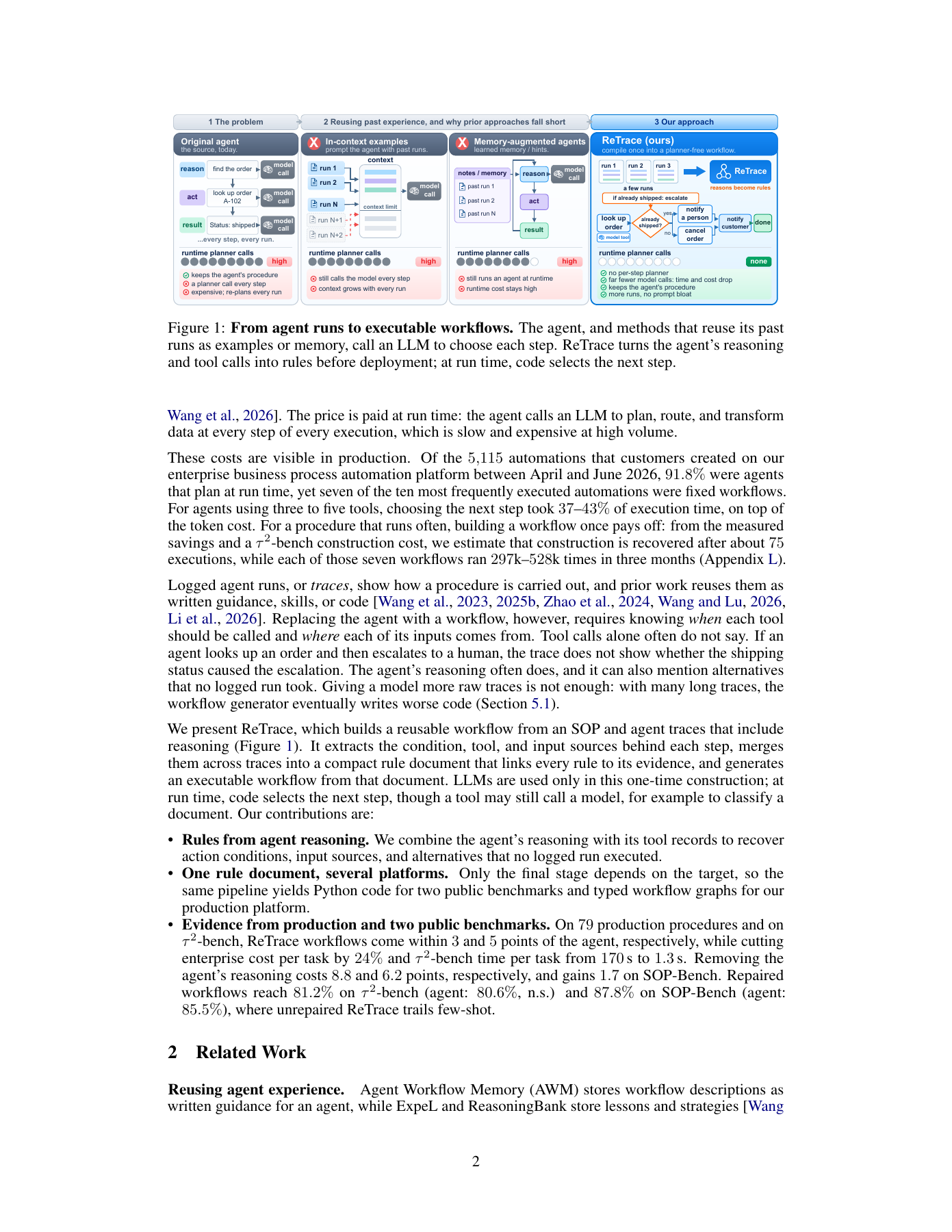
Figure 1, PDF page 2, from the original paper, © the original authors. Only an IR dispatch subset is implemented locally. Image from the original paper; copyright belongs to its authors. Full-system or experimental results shown are not local component results.
Core equations
\(I=(\chi,\langle(g_1,\alpha_1),\ldots,(g_m,\alpha_m)\rangle)\) selects the first satisfied guard until completion check \(\chi\) holds. Guards use only pre-action evidence; arguments cite task inputs, earlier tool results or constants. Supported alternatives absent from executed traces retain an unwitnessed marker rather than being silently removed or called verified.
Paper results
The paper reports 93.8% completion across 79 internal production SOPs versus 96.8% for the agent; public \(\tau^2\) telecom success is 75.8% versus 80.6%. These are not randomized online A/B results or proof of statistical parity. The internal platform and data are private; local code does not reproduce those numbers.
Local implementation
Data contract and code mapping
Binding permits inputs, existing observations and constants. Guard supports typed eq/ne/exists comparisons: integer one is not boolean true. Rule requires evidence citations. DecisionList.next_call() emits a typed call without evaluating arbitrary Python or executing tools. Missing observations, arguments, valid types or applicable rules cause explicit failure rather than invented future results.
PYTHONPATH=src python -c 'from auto_research.agent_research.retrace import diagnostic; print(diagnostic(42))'
Results, controls and limits
CPU diagnostics labeled 42/43/44 dispatch the boolean airplane-mode control, stop on completion and reject missing state. Tests cover first-rule order, type distinctions and preservation of unwitnessed. Zero runtime planner calls describe this interpreter, not a measured end-to-end speedup. LLM extraction, aggregation, synthesis, complex guards and real tool execution are absent. CUDA is rejected.
High-cost full experiment
The full protocol uses repeated Sonnet/Opus merges and construction, 36 requested constructions per trace configuration, training-fold repairs, several benchmarks and a private enterprise platform. It is too costly and is not reproduced (review DONE). Appendix L's USD 2.32 is a public one-time construction estimate, not the enterprise campaign cost; the cheap IR component is not itself classified as expensive.