Sage-Evolve-Preview: Adaptive Observation for Post-Training Self-Improvement
component_only/ L1 CPU mechanism diagnostic, not capability reproduction or executable Evolve integration. This is an overlap addition first released November19 and announced November20, not a new November21 paper. High-cost full experiments are not reproduced (review DONE).
Paper information
| Field | Value |
|---|---|
| Paper | Fixed v1 |
| First author and affiliation | Yinhao Tang; University of Science and Technology of China / Shanghai AI Laboratory |
| Original publication | 2026-11-19 13:52:46 UTC; announcement2026-11-20 |
| Original source code | No paper-specific method source was found in fixed v1 or reviewed sources; cited benchmark repositories are not a method release. |
| Local adapter / key | No full adapter (adapter: null); component sage-evolve |
| Local code | src/auto_research/agent_research/sage_evolve.py; tests tests/test_nov21_sage_evolve.py |
Original paper summary
Background and changes
AdaObs separates the fixed anchor objective from the active observation guiding research. Every checkpoint is still checked on the anchor. At a plateau, it first refines diagnostics on existing outputs, then adds a harder tier of the same task, and finally adds a related task in the same capability direction. It changes how training gaps are observed, not the scoring rules, the original objective or test-answer access.
Within one observation phase, marginal return is score change per10,000 retained examples. An EMA with alpha0.3 triggers a plateau only when all three trailing smoothed values are strictly below0.1; changing observations resets that history. A candidate must strictly improve active or anchor score while losing at most0.5 anchor points. L2 selects the hardest tier with held-out reference pass rate in[0.2,0.6], retaining older tiers; L3 retains older tasks. Failure memory excludes a concrete configuration for the current gap, not an entire lever. The paper retrains from M0 on base data plus retained increments; no warm-start replacement is claimed locally.
Architecture
flowchart LR
  A[Fixed anchor and active view] --> B[Explicit scores and retention gate]
  B --> C[Within-phase marginal-return EMA]
  C --> D{Plateau}
  D -->|Yes| E[L1 diagnostics L2 difficulty L3 related task]
  E --> F[Concrete failure filtering and cumulative view]
  F --> C
Key original figure
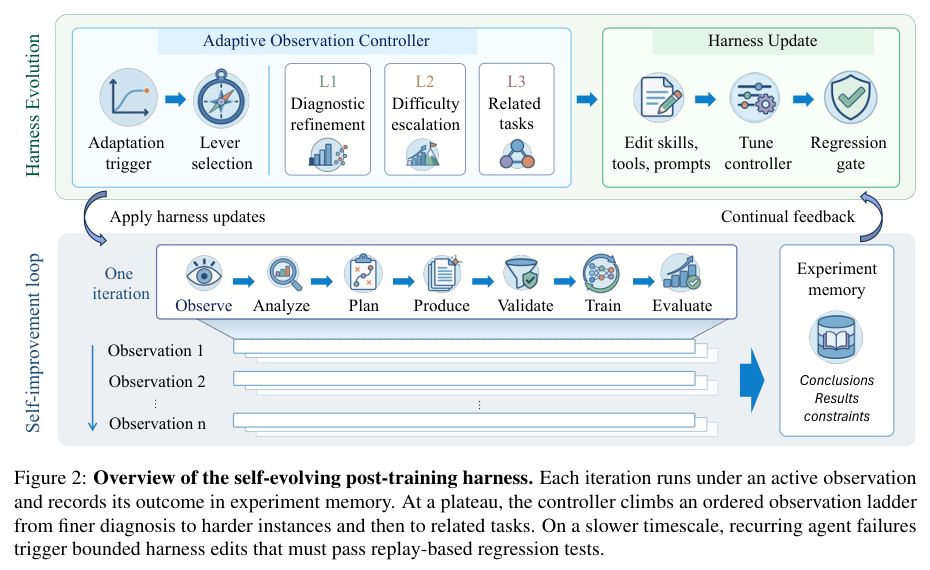
Figure2 and original caption from fixed-v1 PDF page4; copyright belongs to the original authors. Only unrelated text/whitespace is cropped; scientific content is unchanged. Source and crop/SHA256 provenance. This illustrates the author's method, not local evidence.
Core equations
Reported offline and online results
Table1 optimizes eight anchors independently: AdaObs averages73.66 versus66.44 for FixedObs, not one shared model improved simultaneously on all eight. Reported error bars mainly reflect repeated decoding evaluations, not variance across independent training seeds. A separate PostTrainBench study tests transfer across two agent backends. These are author offline results; no production A/B is reported, and local components do not reproduce these scores.
Local reproduction and limits
Data protocol and code mapping
The local slice executes acceptance gates on explicit scores, marginal-return arithmetic, EMA/plateau detection, immutable observation records, first-feasible supplied proposals in L1/L2/L3 order, cumulative tier/task validation, gap-specific failed-configuration filtering and reference-rate tier selection. The first MR initializes the EMA and input order resolves tied proposals: explicit deterministic local conventions. MR requires a positive supplied retained-example count and rejects a zero denominator. Because the paper does not fully define rejected-increment data accounting, attempted examples are not silently called retained; callers may supply a defined MR directly. No LLM analysis/planning/production, data generation, contamination checker, SFT, scheduler or harness editor executes. Proposal feasibility and semantic diagnosis remain external.
PYTHONPATH=src python -c 'from auto_research.agent_research.sage_evolve import diagnostic; print(diagnostic(42))'
PYTHONPATH=src python -m pytest tests/test_nov21_sage_evolve.py -q
Only explicit synthetic control inputs are used. No capability benchmark is loaded and no hyperparameters are selected on test data. After the batch source freeze, the shared runner writes three-seed CPU diagnostics. Three seeds do not promote L1 evidence or constitute independent model training.
Same-topic comparison and limits
Reviewed against agent-research:harness2: Harness² holds model weights fixed and improves task harnesses through reference/candidate execution contrasts and composition, preserving cross-task lessons. Full AdaObs updates model weights while holding the anchor fixed and adapting observations; plateaus concern marginal data returns. Both use memory to avoid repetition, but choosing a harness differs from exposing a new training gap. The local Harness² slice is also a mechanism diagnostic, so their control pass rates cannot compare agent capability.
Controls keep equality with epsilon outside the plateau, reject cross-phase score use, reset history on a phase change, preserve other L1 options after one concrete failure and isolate failures by gap. L2/L3 may not discard prior members or change several axes. Exactly0.5 anchor regression is allowed, while0.501 is rejected. CPU controls establish rules, not successful autonomous data discovery or Evolve promotion.
High-cost full experiments
The paper uses full-parameter SFT of Qwen3.5-35B-A3B,256K-token samples/packs,64H200s and roughly12hours per iteration, with up to eight concurrent runs. Evaluations allow64K generation and up to1M-token sessions. This clearly exceeds oneA100/A30 or a Mac, so full training/evaluation is not reproduced, without weight downloads or trial runs. Only the small CPU control kernel executes. Too costly; not reproduced (review DONE). This is a terminal decision, not an automatic retry or implementation queue. Passing the cheap slice does not reproduce the full paper.