Data Quality LSA: Pretraining covariance, SFT, and outcome supervision¶
Paper information¶
| Field | Value |
|---|---|
| Paper | arXiv 2603.01293; pinned v1 full text |
| Original title | Theoretical Perspectives on Data Quality and Synergistic Effects in Pre- and Post-Training Reasoning Models |
| Organization | First author Adel Javanmard: University of Southern California / Google Research |
| First published | 2026-03-01 (arXiv v1) |
| Original author code | No implementation repository found in v1 or on the official institution page; this is not an exhaustive claim about public code. |
| Local adapter / key | data-quality-lsa; adapter: null, component_only |
| Local code | src/auto_research/foundation_models/google16_data_quality_lsa.py; scripts/run_google16_neural.py |
| Full experiment | GPT2 training over multiple grids and long repeated runs is not reproduced due to cost (review DONE). |
Original paper summary¶
Background and main changes¶
In-context weight prediction for linear regression isolates how pretraining and post-training covariance affect learning. SFT uses teacher intermediate states; OS supervises only the final prediction. The paper defines OS as outcome-supervised regression, not full RL with sampling, advantage estimation, and policy gradients. See §§3 and 4 for the linear attention and closed-form solution.
flowchart LR
  C[Pretraining covariance] --> I[Population initialization for V and W]
  X[Linear-regression x and y context] --> Z[Block prompt]
  Z --> A[Linear self-attention without softmax]
  I --> A
  A --> O[Autonomous multistep rollout and terminal OS]
  T[Training weight labels] --> S[Teacher-state SFT]
  S --> A
  X --> F[Closed-form SFT solution closest to initialization]
Key figure from the paper¶
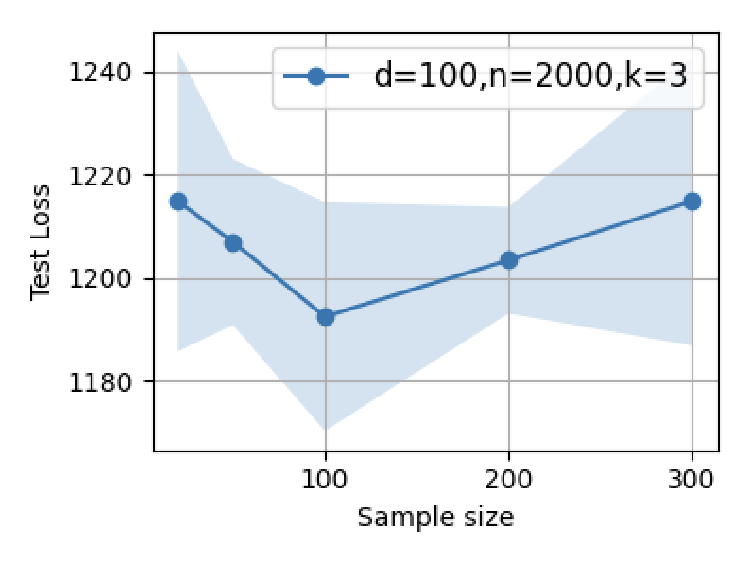
Figure 4(a): effect of SFT sample size on LSA. This is one subfigure of the original six-panel figure, not a local run. The paper provides no model architecture image; none is fabricated here. Copyright belongs to the authors. Source and hash.
Core equations¶
Eqs. 3.2–3.8 retain four blocks for inputs, labels, predicted weights, and constants. OS appends actual generated tokens at every step and minimizes \(\|\widehat w_k-w^*\|^2/(2B)\) at the end. SFT uses \(w_i=[1-(1-\eta)^i]w^*\) and sums next-token terms for \(i=0,\ldots,k\).
The nonzero value block in Eq. 4.1 is \(\widetilde V_*=-\eta\Omega\Phi^\dagger-\Gamma_0^{-1}(I-\Phi\Phi^\dagger)\) with fixed \(\widetilde W=I\). The implementation retains the initialization's data-null-space component instead of returning only the minimum-norm fit.
Offline and online results in the paper¶
The paper tests the theoretical trends with synthetic covariance shifts and a roughly 9.5M-parameter GPT2 architecture. It reports no online A/B. Local checks cover equations, gradients, and closed-form normal equations, not general claims about data quality in large-model RL.
Local reproduction¶
population_initialization, context_embedding, lsa_forward, rollout, sft_loss, outcome_supervision_loss, and closest_sft_value can be composed. Autonomous rollout has no ground-truth weight argument; it sees only public task context. Targets enter only explicitly named training losses.
PYTHONPATH=src python scripts/run_google16_neural.py \
  --device cpu --seed 42 --output runs/google16-neural-cpu.json
The runner uses d=4 and 6 generated prompts as a mathematical diagnostic, fixture_only: true, with no train/test capability claim. Independent tests check rearranged matrix products, first-step preconditioned covariance prediction, SFT/OS supervision boundaries, normal equations, and null space. The CUDA receipt does not raise the L0/L1 evidence tier. No Evolve execution mapping.
Cost and unreproduced scope¶
Section 8 uses long d=100 LSA training and a 12-layer, 8-head GPT2 with d=256, 100 SFT steps, 12K OS steps, ten repeats, and multiple dataset sizes and covariances. That grid is not a short component task on the available single GPU. No downloads or trial runs were started. The exact low-dimensional mathematical core is retained without presenting the scaled fixture as the full experiment.