简体中文 · English
Chinese-Jev: A Chinese System One decision model
L1 objective and model head. Candidate marker representations, candidate-probability supervision and RLCD-style calibration are implemented. The paper's model trained on 10 million examples was not trained locally.
Paper information
| Field | Details |
|---|---|
| Paper | Chinese-Jev |
| Institution | Fudan University (first author affiliation) |
| First public release | 2026-09-29 (arXiv v1) |
| Original source code | No standalone repository released; the project page says models, data and code are planned. |
| Local adapter/method | chinese-jev |
| Local reproduction code | src/auto_research/foundation_latest_20260930.py |
Original paper summary
Background and main changes
Chinese-Jev targets closed-output tasks such as classification, routing and candidate selection. A lightweight encoder reads Chinese context and candidates and scores hidden states at candidate markers directly. Heterogeneous labels become candidate-probability distributions. Pretraining uses 10 million general examples before separate medical, legal and finance fine-tuning.
flowchart LR
  X[Chinese task and candidates] --> E[Encoder]
  E --> M[Candidate marker hidden states]
  M --> P[Softmax decision distribution]
  Y[Probability targets] --> CE[Cross-entropy]
  P --> CE
  P --> R[RLCD calibration]
Key figure from the paper
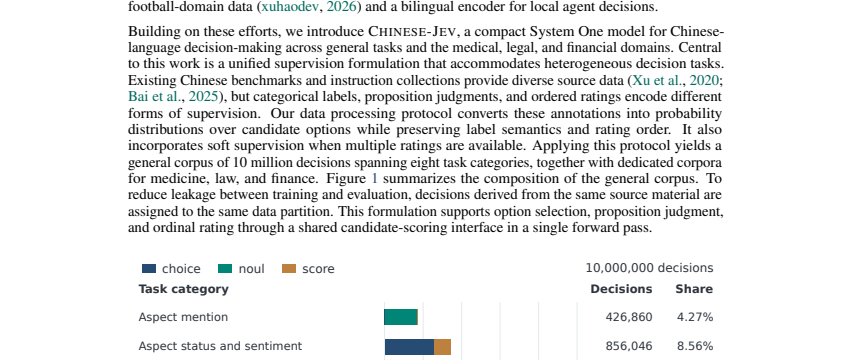
Figure 1 shows the composition of general Chinese decision data. From the paper; copyright belongs to the authors.
Core equations
Candidate \(i\) receives \(s_i=w^\top h_{m_i}\) and \(p_i=\mathrm{softmax}(s)_i\). The local objective combines soft-label cross-entropy \(-\sum_i q_i\log p_i\) with \(-\log p_i\) weighted by reward-centered advantage. It preserves candidate decisions rather than autoregressive generation.
Offline and online results
The paper reports 1.24% higher general-task accuracy than closed Jev, 20.3× speed, a 4.0% medical gain after domain fine-tuning and roughly 15ms mean latency. These are paper results. See local three-seed mechanism metrics.
Local reproduction and limits
ChineseJevHead runs forward and backward with probability normalization and finite-gradient checks. No paper data, full backbone, mobile INT8 deployment or paper-scale performance comparison.