SPLASH: Switching Parallel Layouts of Attention with Seamless Handoff for LLM Serving
L1 memory model and transition-aware planner, no CUDA handoff or B200/H200 performance validation.
Paper information
| Field | Details |
|---|---|
| Paper | arXiv 2609.37626 |
| Institution | Institute of Computing Technology, Chinese Academy of Sciences (first author). |
| First public release | 2026-09-29 (arXiv v1) |
| Author code | SPLASH-sglang. |
| Local adapter or method key | splash |
| Local reproduction code | src/auto_research/foundation_latest_20261001.py |
Paper method and evidence
Unify attention-weight and KV-cache ownership. DOP shards weights while giving requests exclusive KV; schedule among TP, DP, CP, and DOP online, amortizing transition cost over remaining steps.
flowchart LR
  W[Weight and KV ownership] --> M[Memory models by layout]
  M --> P[Planner amortizes switching]
  P --> L[TP, DP, CP, or DOP]
Original paper figure
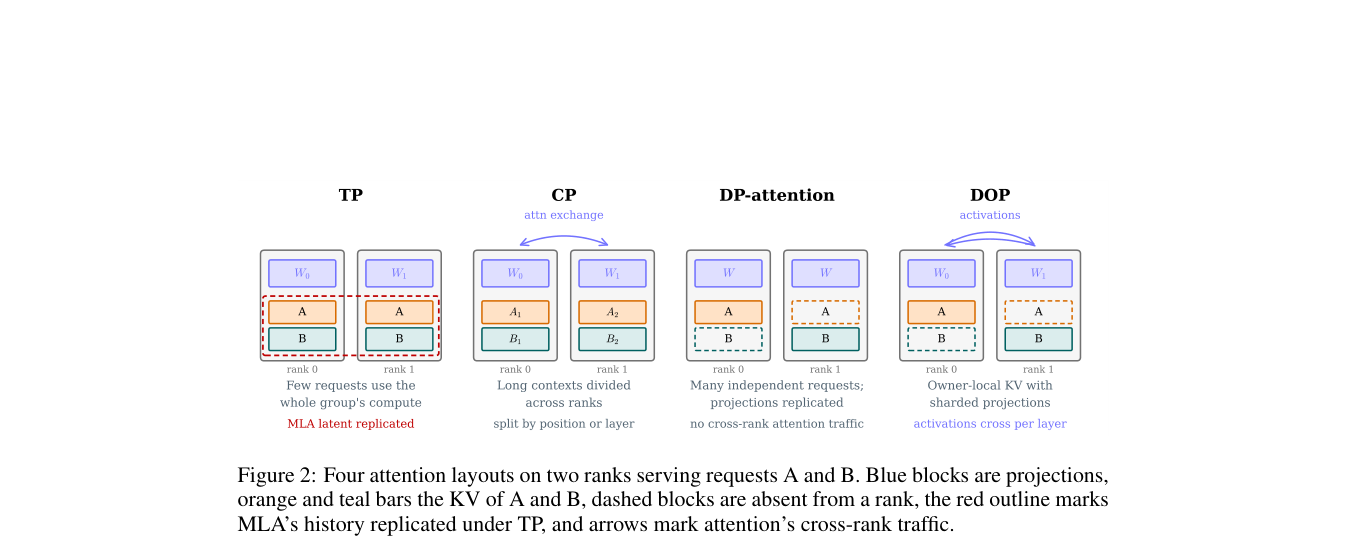
Figure 2 shows the layouts and handoff system. From the original paper; copyright remains with the authors.
Core equation
\(M_{TP}=W_A/T+Bks\), \(M_{DOP}=W_A/T+Bks/T\), \(M_{DP}=M_{CP}=W_A+Bks/T\); the planner also amortizes switching costs.
Reported results
Paper-reported B200/GLM-5.3 throughput is 1.3–1.73× fixed layouts, median switch overhead below 0.51% of its step. A100/A30 are not substitutes for that evidence.
Local reproduction
Compare with the corresponding operator disabled or in its default state. Three-seed metrics are diagnostic_only=true: they verify execution and invariants, not formal gains or capability ranking.