简体中文 · English
Cross-Entropy Guided Routing in Mixture-of-Experts Large Language Models
L1 core mechanism diagnostic. Error-aware routing runs; Granite MoE was not trained.
Paper information
| Field | Details |
|---|---|
| Paper | arXiv 2609.37751 |
| Institution | Bar-Ilan University (first author affiliation) |
| First public release | 2026-09-29 (arXiv v1) |
| Original source code | No public author repository found as of 2026-10-01. |
| Adapter | ce-guided-moe |
| Local reproduction code | src/auto_research/foundation_latest_20261001.py |
Original paper summary
Background and main changes
Add a per-expert token-error head alongside native MoE affinity. Use a shifted logarithm of predicted error to attenuate routing logits before Top-K, downweighting experts with high predicted error. Actual next-token cross-entropy supervises the error head.
flowchart LR
  I[Public input and current state] --> M[Error-aware MoE routing]
  M --> A[Auditable intermediates]
  A --> O[Output or state update]
Key figure from the paper
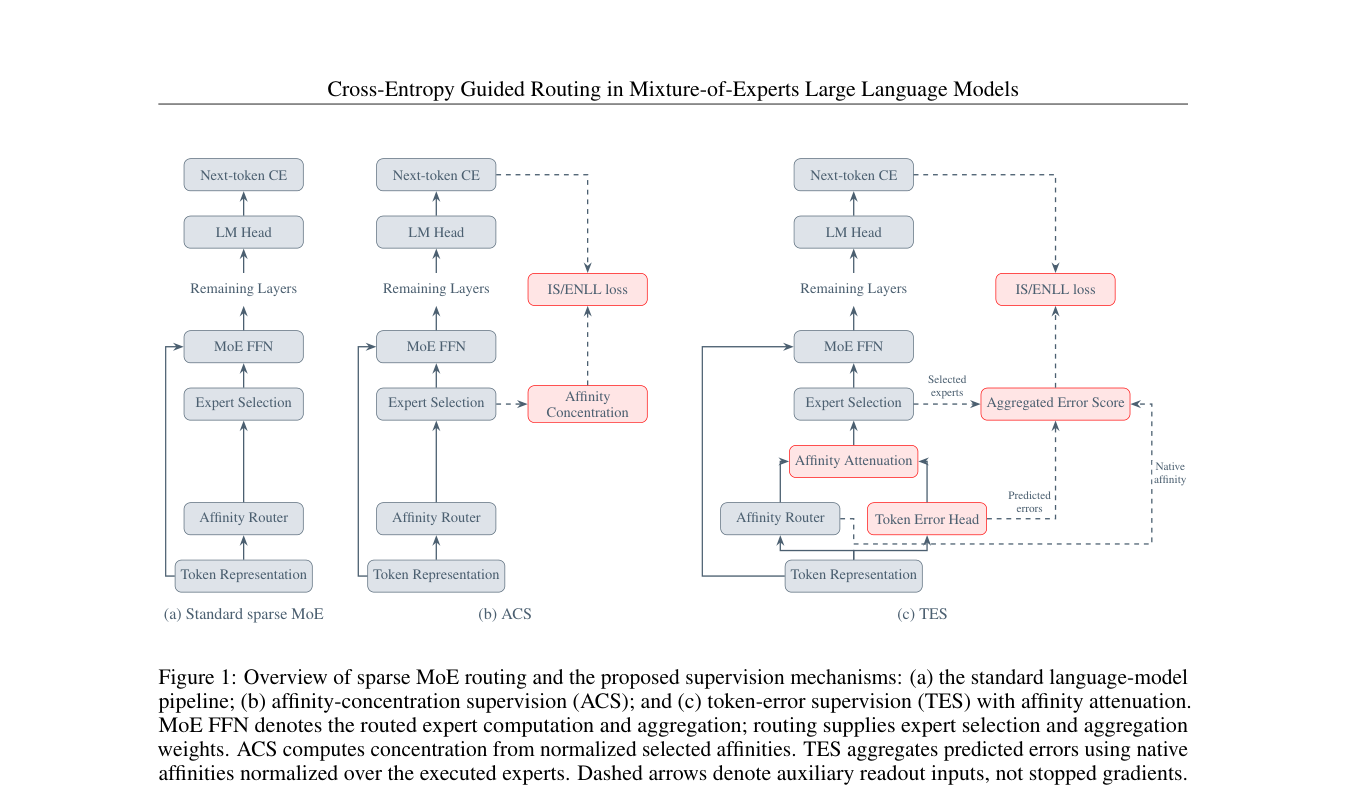
Figure 1: Overall workflow, stages and data flow. From the paper; copyright belongs to the authors. Click for the source.
Core equation
\(\tilde a_{t,i}=a_{t,i}-\gamma\log(1+\hat e_{t,i}/\tau)\), then apply softmax and Top-K to \(\tilde a\).
Offline and online results
The paper's Granite MoE experiments report about 2.3 percentage points on average. The local run verifies only error-aware affinity attenuation.
Local reproduction
Comparison protocol: Disabled or default mechanism versus enabled operator. Only invariants and state transitions are checked; cross-model relative change is not applicable.
See three-seed diagnostics. diagnostic_only=true means executable state transitions, gradients or scheduling invariants, not formal capability ranking.
Scope
The error-aware routing equation runs; Granite MoE was not trained.