简体中文 · English
On Trajectory-Aware Training for Masked Diffusion Language Models
L1 core mechanism diagnostic. Consecutive denoising carry and within-window BPTT run. LLaDA-8B was not trained.
Paper information
| Field | Details |
|---|---|
| Paper | arXiv 2609.37974 |
| Institution | Apple (first author affiliation) |
| First public release | 2026-09-29 (arXiv v1) |
| Original source code | No public author repository found as of 2026-10-01. |
| Adapter | pumba |
| Local reproduction code | src/auto_research/foundation_latest_20261001.py |
Original paper summary
Background and main changes
During training, unroll consecutive denoising steps along the model's own progressive-unmasking trajectory. Pass a hidden carry to the next step and backpropagate through time within a fixed window, so an earlier step learns to produce a useful carry for later steps.
flowchart LR
  I[Public input and current state] --> M[Trajectory-aware denoising]
  M --> A[Auditable intermediates]
  A --> O[Output or state update]
Key figure from the paper
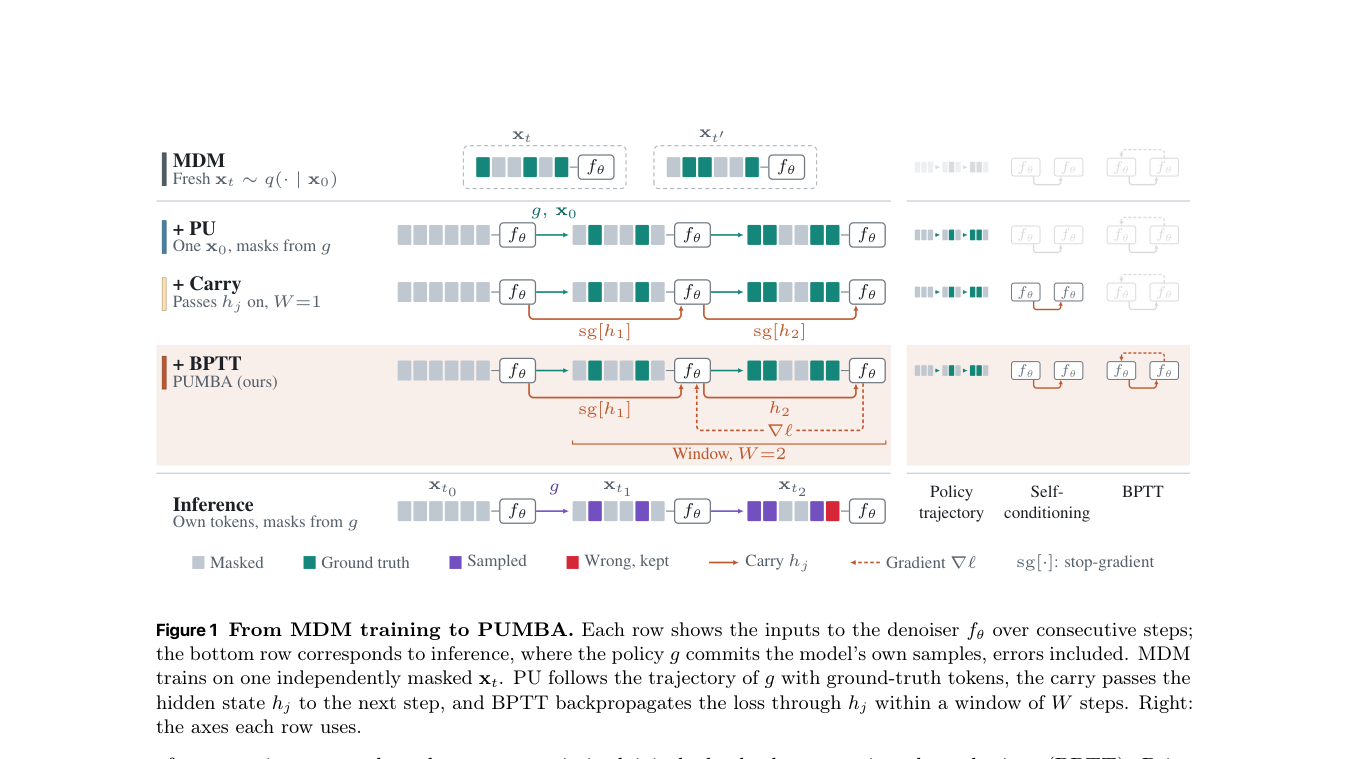
Figure 1: Training workflow and key optimizations. From the paper; copyright belongs to the authors. Click for the source.
Core equation
\(L_W=W^{-1}\sum_{j=1}^W CE(f_\theta(x_{t_j},h_{j-1}),x_0)\). Gradients pass through the carry within each window and stop between windows.
Offline and online results
The paper reports about 22%–26% fewer function evaluations for LLaDA-8B at comparable quality. Only within-window BPTT is checked locally.
Local reproduction
Comparison protocol: Disabled or default mechanism versus enabled operator. Only invariants and state transitions are checked; cross-model relative change is not applicable.
See three-seed diagnostics. diagnostic_only=true means executable state transitions, gradients or scheduling invariants, not formal capability ranking.
Scope
Consecutive denoising carry and within-window BPTT run. LLaDA-8B was not trained.