LLM2Jev: LLMs Are Already Jev-Style Decision Models — When and How to Fine-Tune Them
L1 mechanism diagnostic: joint candidate scoring and KL anchoring. No 4B checkpoint or JevBench run.
Paper information
| Field | Details |
|---|---|
| Paper | arXiv v1 |
| Institution | Microsoft, identified by first-author email. |
| First public release | 2026-10-01 (arXiv v1) |
| Author code | No public author implementation found as of 2026-10-03. |
| Local adapter or method key | llm2jev |
| Local reproduction code | src/auto_research/foundation_latest_20261003.py |
Paper method and evidence
Use next-token probabilities over parenthesized numeric options to form a distribution over a finite candidate set. Fine-tune with a listwise decision loss and a KL term that anchors auxiliary outputs to the base model.
flowchart LR
  I[Numbered options] --> M[Joint listwise scoring]
  M --> A[KL anchor on auxiliary outputs]
  A --> O[Decision distribution]
Original paper figure
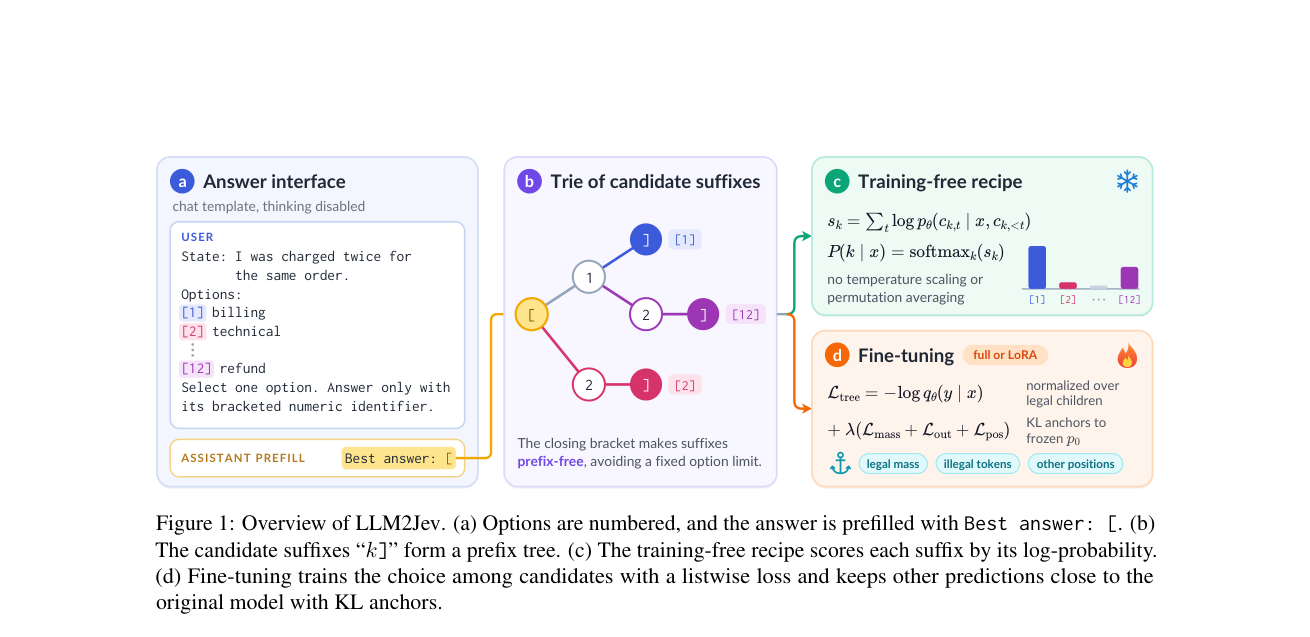
Figure 1 shows the decision-training and optimization path. From the original paper; copyright remains with the authors.
Core equation
\(p(o)\propto\exp\sum_t\log p([o]_t)\) and \(L=L_{list}+\lambda KL(p_{base}\|p_{aux})\).
Reported results
The authors report that untrained Qwen3.5-4B matched same-backbone community Jev models and that fine-tuning helped mainly on weaker tasks.
Local reproduction
Compare the mechanism-on path with its disabled/default state. The three-seed diagnostic is diagnostic_only=true; no formal relative improvement, capability ranking, 4B checkpoint run, or JevBench evaluation.