TESS: A transferable data-selection meta-network
L1 real sequential training of two small classifiers and a selector, not LLM data-selection gains.
Paper information
| Field | Details |
|---|---|
| Paper | arXiv 2610.02092 |
| Institution | Nanyang Technological University; Zilin Du. |
| First public release | 2026-10-01 (arXiv v1) |
| Author code | No author code found in full text on 2026-10-04; Alpaca data is not method source. |
| Local adapter or method key | tess (Python mechanism API). |
| Local reproduction code | src/auto_research/post_training/tess.py |
Paper method and evidence
Train one model on train only and another with validation guidance. Use their per-example loss gap as a value pseudo-label. Pointwise value matching avoids the poorly behaved direct objective and can transfer the small teachers' selection rules to an unseen pool.
flowchart LR
  I[Shared initialization] --> U[Train-only model]
  I --> V[Validation-guided model]
  U --> D[Loss gap]
  V --> D
  D --> P[Detached value targets]
  P --> S[Score unseen pool]
Original paper figure
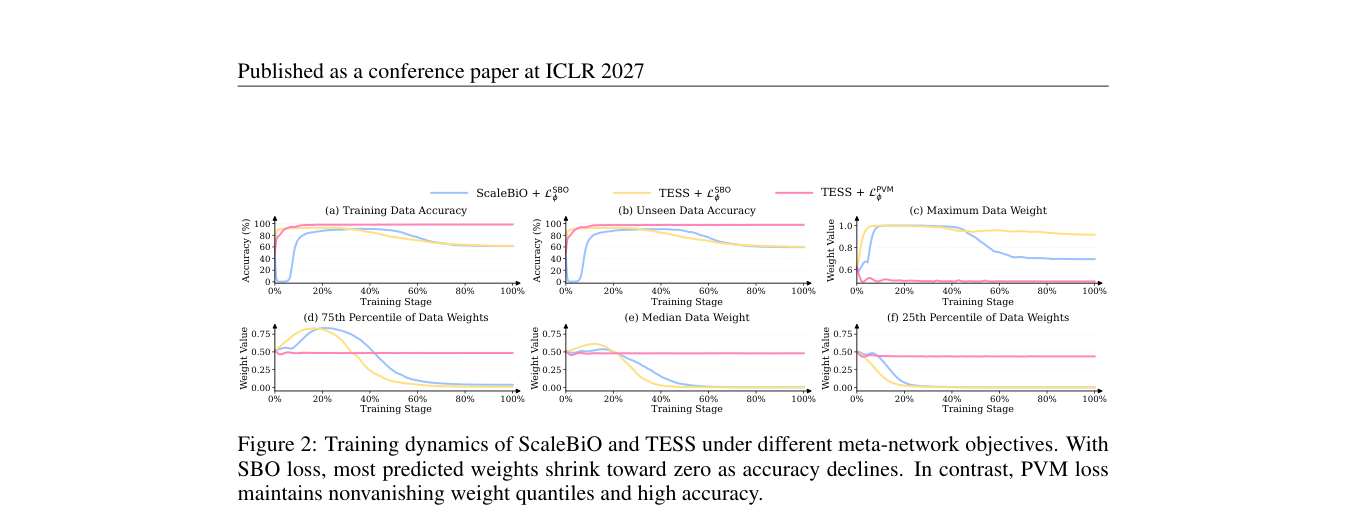
Figure 2 shows training and selector objective. From the original paper; copyright remains with the authors.
Core equation
\(U=\operatorname{Train}(D_{train})\), \(W=\operatorname{Train}(L_{val}+\alpha L_{train})\), \(\Delta_i=\ell(U;x_i)-\ell(W;x_i)\) and \(L_{PVM}=N^{-1}\sum_i(g_\psi(x_i)-\operatorname{stopgrad}(\Delta_i))^2\). Same initial weights, sequential training and saved per-example losses; release models afterward. Do not use test as validation.
Reported results
The paper studies cross-pool/model-scale transfer and contrasts PVM with direct meta-objectives. No production A/B; fitting loss is not downstream LLM validation.
Local reproduction
PYTHONPATH=src python scripts/run_oct04_seven_papers.py creates 64 train, 32 validation, and 48 disjoint pool items. Two classifiers train 60 steps each, selector 120, three seeds. Metrics: PVM 0.0803→0.0129 and nonconstant scores for 48 pool items. No test access or accuracy. fit_tess accepts per_example_loss(model,batch) including token-average LM loss, preserves source weights and detaches labels. Negative scores are not clamped or treated as sampling probabilities. Synthetic 2D features only, no full LLM scoring/retraining or Evolve promotion.