Stratified Retention: separate what should persist from what should change
L0 evaluation-protocol component, not a continual-learning algorithm. The paper is a proposal without new empirical experiments. Local code implements auditable reporting, not world-model training or improved retention/adaptation capability.
Paper information
| Field | Value |
|---|---|
| Paper | arXiv:2610.03713v2; fixed text |
| Institution/company | First author Nishit Anand: University of Maryland, College Park, USA |
| Original release | October 2, 2026, 17:58:14 UTC (arXiv v1); reviewed v2 updated November 12, 2026, 21:35:23 UTC |
| Authors' code | No accompanying author implementation repository is linked in fixed v2; no separate release was found as of November 18, 2026. Referenced continual-learning repositories are not this paper's code |
| Local adapter/key | stratified-retention-protocol; adapter null; not integrated into Evolve |
| Local code | src/auto_research/foundation_models/stratified_retention_protocol.py; tests/test_nov18_data_protocols.py |
Original paper
Motivation and changes
A world changes: predicting a chair's old position after it moves is stale knowledge, not good memory. Structural properties such as object permanence should nevertheless survive adaptation. The paper stratifies knowledge by environmental invariance timescale: invariants, long-lived regularities, short-lived instance configurations, and immediate transient state. This timescale is not a cache TTL; transient state should not simply be written into weights. Sections 3–5
Old-task accuracy alone favors a frozen model. The proposal therefore reports invariant retention, post-change revision latency, and false revisions under reverting perturbations separately, without a composite that hides their trade-off.
Key original figure
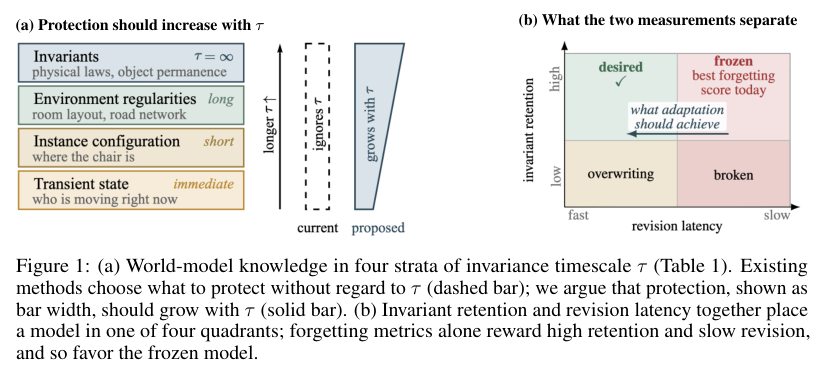
Figure 1 and caption, fixed-v2 PDF page 2, rendered and cropped without redrawing. The quadrants are conceptual illustrations, not new author or local experiment points. Provenance and SHA256. Copyright remains with the authors.
Image from the original paper; copyright belongs to the original authors.
Equations
A fixed held-out probe panel is evaluated after every adaptation round. Report its worst pass fraction over the stream, not just final recovery:
A negative flip is a previously correct probe becoming incorrect; correcting an old error is not forgetting. After each real change, held-out queries from a new episode compare preference for the new versus old fact. Revision latency counts relevant-region observations until a declared margin is exceeded for several consecutive observations. This notation formalizes the paper's prose protocol; it is not a new training loss from the authors.
Paper results
The paper trains no new world model and reports no new benchmark measurements or production A/B. Frozen/overwriting quadrants in Figure 1 are explanatory contrasts, not an empirically validated new algorithm.
Local component
Inputs and code
ProbeRound/invariant_retention consume external evaluation results, not a model or a gold-to-policy channel. Probe IDs must remain fixed and disjoint from adaptation examples. ChangeTrace/revision_report distinguish regularity and instance strata, require a different evaluation episode, and report latency, never-revised counts, and right-censored counts. false_revision_rate separately reports false alarms under reverting perturbations.
PYTHONPATH=src python -c 'from auto_research.foundation_models.stratified_retention_protocol import diagnostic; print(diagnostic(42, device="cpu"))'
Controls and limits
Counterexamples include an invariant that fails then recovers, correction of an old error, a frozen trajectory, and a late censored change. Controls reject adaptation/probe overlap, same-episode queries, and undeclared truncation. Scalars describe these constructed cases, not model capability; repeating seeds adds no statistical evidence.
Full experiment status
There is no original full capability experiment to reproduce; no new training campaign is invented here (review DONE). Real world-model probes, stratum labels, environmental changes, and adaptation methods remain unimplemented. The component is neither a high-cost reproduction nor evidence to promote Evolve candidates.