Data-Space Iteration: A shared generator with genuine distribution-matching distillation
L1 training mechanism diagnostic. An NVIDIA A100 trained a flow teacher on public images and ran alternating DMD with that frozen teacher, a trainable fake model, and a shared generator. This is neither a random-teacher proxy nor a fixed synthetic reward. One of three seeds improved and two worsened.
Paper information
| Field | Details |
|---|---|
| Paper | arXiv 2610.12102v1; full text |
| Institution | ByteDance Seed; first author Shanchuan Lin |
| First public release | 2026-10-08 (arXiv v1) |
| Author code | Appendix E, Algorithms 1–2 publishes core PyTorch code, not a complete training repository; no complete external author repository found as of 2026-10-11. |
| Local adapter | data-space-iteration |
| Local reproduction code | data_space_iteration.py under src/auto_research/foundation/; runner scripts/run_data_space_iteration.py |
| Local teacher | Small two-scale U-Net trained from scratch on CIFAR-10, not the author's SongUNet-55M or a pretrained checkpoint. |
Paper method and evidence
Instead of advancing along a discretized noising/denoising trajectory, use the same input noise at each refinement and update a data prediction with shared weights. The step index is not flow time. For DMD, a real frozen teacher and a fake model tracking the generated distribution give the update direction. Prefix rollouts do not build a gradient graph. Method and appendix
flowchart LR
 D[Official training images] --> T[Train flow-matching teacher]
 T --> F[Freeze teacher]
 Z[Fixed original noise] --> G[Shared generator and step embedding]
 G --> X[Prediction with no-grad prefix]
 X --> N[Noise at beta-sampled time]
 N --> F
 N --> K[Fake flow model]
 F --> R[Teacher minus fake direction]
 K --> R
 R --> U[Update generator at current refinement]
 X --> K
 U --> E[Paired EMA evaluation at one to four NFE]
Original paper figure
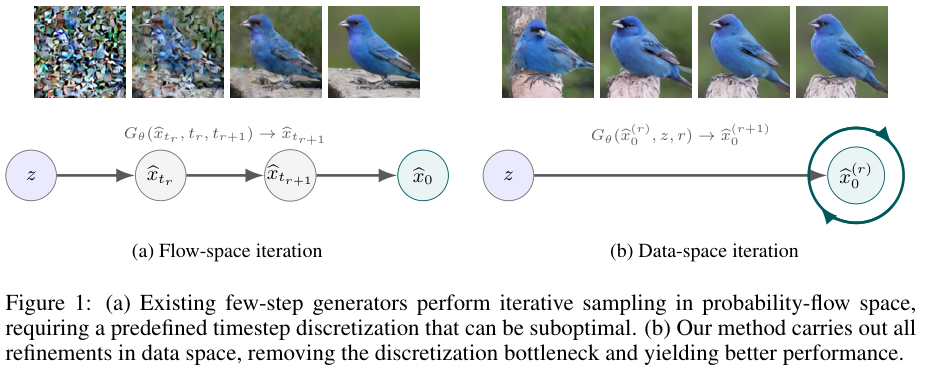
Figure 1 compares the two iteration spaces. Copyright remains with the paper authors.
Core equations
For selected \(r\), detach the preceding \(r\) steps and optimize only the last. Draw \(\tau\sim\operatorname{Beta}(2.5,1)\) and set \(x_\tau=(1-\tau)\hat x+\tau\epsilon\):
Fake training uses detached current generated samples; teacher and fake do not accumulate gradients during the generator update. There is no direct regression of the generator to a real image at each step.
Reported results
The paper compares shared few-step generation on ImageNet. On CIFAR-10 with a 55M SongUNet teacher, Appendix G reports 2-NFE FID 8.28 versus DMD 11.14, and 4-NFE FID 8.62 versus 10.03. Data-space is worse at 1 NFE. These are not local pooled-pixel Fréchet distances.
Local reproduction
Install python -m pip install -e '.[data-space-gpu]' (includes SciPy). Compare flow-renoise and data-space with the same genuinely trained teacher, split, and budget per seed. Retain both EMA trajectories at 1/2/3/4 NFE, including negative or failed seeds.
The scaled unconditional two-scale residual U-Net keeps the flow-matching and alternating DMD chain, but is not the author's class-conditional ImageNet model or SongUNet-55M. Verify official MD5 hashes for all five CIFAR-10 training batches before deserialization. Class-balanced train/holdout splits (1,024/256 images) are disjoint; official test is not read. Seeds 42/43/44 each train a teacher for 200 steps, then share it across both recipes; generator 128 steps each, four fake updates per step, batch 32, width 32, depth 2. Record held-out velocity MSE before and after teacher training, verify parameter change, and verify unchanged teacher hash during distillation.
PYTHONPATH=src python scripts/run_data_space_iteration.py \
  --data data/cifar10 --offline \
  --teacher-steps 200 --distill-steps 128 \
  --batch-size 32 --width 32 --depth 2 \
  --seeds 42,43,44 --output runs/data-space-cifar.json
Fetch the official pinned archive if missing; an empty directory is not a cache. Without --offline the runner downloads and verifies it. PyTorch, NumPy, and SciPy are required. Adam uses lr=1e-4, betas=(0,.95), no weight decay or clipping, EMA 0.9999, 4:1 fake/generator updates, and r=step%4. Non-finite loss or gradients fail before updates. pixel_feature_frechet_distance uses mean-pooled pixel features, not Inception FID. Short training and high EMA decay can leave outputs close to initialization; this is not L2 benchmark evidence.
Measured A100 results
| Seed | Teacher held-out velocity MSE before → after | Flow-renoise 4-NFE pixel Fréchet | Data-space 4-NFE pixel Fréchet | Relative change (lower is better) |
|---|---|---|---|---|
| 42 | 1.2854 → 0.3138 | 35.1885 | 22.1266 | -37.12% |
| 43 | 1.2822 → 0.3125 | 17.0755 | 18.7147 | +9.60% (worse) |
| 44 | 1.3046 → 0.3003 | 16.5652 | 19.8272 | +19.69% (worse) |
Each recipe had 128 actual generator updates and 512 fake updates; both backbone hashes changed, not only a new step embedding. All paired 1–4 NFE results and training gradients are retained. A lower teacher loss proves the teacher was trained, not that it matches the author's teacher. One improved seed and two worse seeds do not show a stable gain.
Initial GPU backward exposed inherited requires_grad=False when copying the frozen teacher. Separate student/fake backbones now explicitly enable gradients; the original teacher stays frozen. A regression runs four-prefix DMD after training/freezing a real network. All three full-budget runs were repeated after the fix; the failed run is not a pass. scripts/curate_data_space_evidence.py verifies initial/final teacher hashes, measured losses, frozen pairing, actual student/fake backbone changes, four fake updates per step, nonzero generator gradients, every NFE, and all seeds before producing metrics and a receipt.
Boundaries
No 674M SiT-XL/2, 40-epoch ImageNet run, 55M SongUNet, class-conditional CFG, Inception FID-50k, or original schedule search was reproduced. Matched-budget, rollout, and gradient tests are not a substitute for real GPU verification. A future refinement operator counts as Evolve integration only when the controller runs it and evaluates on independent validation.