When the KV Cache Is Slower Than the GPU: Scaling Remote KV Tiers for Context-Parallel Prefill
Research reference only. Not reproduced due to cost (review complete). No local capability metrics, training results, or executable evolve operator.
Paper information
| Field | Details |
|---|---|
| Paper | arXiv 2610.21500; pinned v1 full text |
| Organization | Multiverse Computing; first author Muhammad Ibrahim |
| First public release | October 15, 2026 at 08:37:22 UTC (arXiv v1; announced October 16) |
| Authors' code | Public author/upstream code. Relevant implementations are public as the authors' upstream LMCache PRs. Public PRs do not establish that all changes are merged or that the entire cluster experiment is available to reproduce. |
| Local adapter / stable key | remote-kv-tiers (reference key, not an executable adapter) |
| Local reproduction code | No algorithm implementation; this page and catalog metadata only |
| Review status | Full experiments not reproduced; review complete. This does not block other papers or enter the automatic retry queue. |
Original paper
Motivation and method
A cache hit is not always faster than recomputation. The work first calculates the break-even bandwidth and fixed overhead for loading versus recomputing. It then shards the MLA KV cache by PCP rank and uses a separate remote instance for each rank plus asynchronous loading to eliminate head-of-line blocking.
Architecture and data flow
flowchart TD
  Q[Long-context request] --> C{Is loading faster than recomputing?}
  C -->|Load| S[KV cache sharded by PCP rank]
  S --> A[Separate remote instances and asynchronous loading]
  C -->|Recompute| P[Prefill]
  A --> P
Key figure from the paper
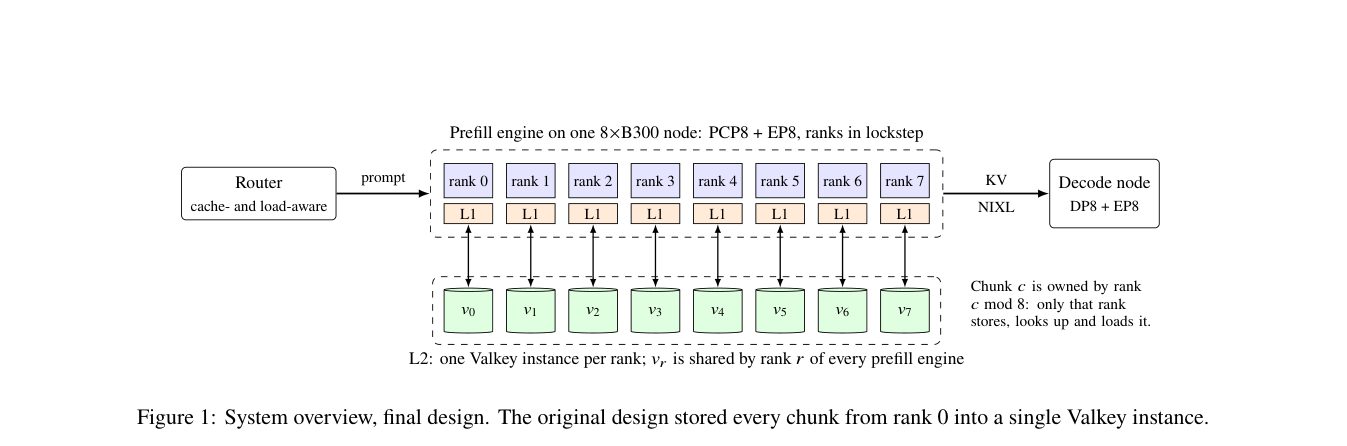
Figure 1: Overview of the paper's design and components. From the original paper; copyright remains with the authors. Click the figure to see the source.
Core equations
The following is shorthand for the mechanism, not a result from a local run. See the pinned v1 paper for full definitions and details.
Paper results
The authors report that p99 latency on a cache-hit-heavy request stream falls from 83.32 seconds to 0.67 seconds, with remote GET bandwidth 6.3× higher. The end-to-end comparison changes both parallelization and node layout. The paper explicitly distinguishes this comparison from a single-variable cache ablation.
The paper reports no randomized online A/B test on production users. System measurements, robotics tasks, and language-model benchmarks are not equivalent to user A/B tests in search, ads, or recommendation.
Local reproduction
The review documents the method, resource requirements, public-code status, and original figure. No full experiment was run, no checkpoint was downloaded, and no synthetic capability score was substituted.
Cost assessment
The setup uses GLM-5.3 FP8 MoE and eight B300s per node. The end-to-end 4P+1D configuration needs five nodes. A single A100 or A30 cannot faithfully validate the distributed gains. This assessment comes from the paper's experiment configuration rather than local measurement. The available environment is a single A100, a single A30, or a Mac; it does not assume multi-GPU access or concurrent use of both GPU hosts.
Not reproduced due to cost (review complete). A single-host fixture would not reproduce cross-node KV transfer or distributed serving gains. This work will not be retried automatically.
Reproduction boundary
There is no local adapter, metrics file, GPU receipt, or executable evolve operator. Original results are provided as research reference only. See the implementation and review contract for this batch.