B3: overlapping diffusion blocks with a self-calibrating gate
L1 CPU mechanism component. Only the spawn gate and block-causal attention arithmetic are checked. No diffusion model, generated answer, or throughput reproduction is supplied.
Paper information
| Field | Value |
|---|---|
| Paper | arXiv:2611.14387v1; fixed text |
| Institution/company | First author Amir Mann: Technion; work performed during an Amazon internship, with collaborators at Amazon Web Services |
| Original release | November 10, 2026, 17:40:24 UTC, November 11 in Shanghai; November 11 category announcement |
| Authors' source code | No B3 repository found in fixed v1 or author links. Hugging Face and Math-Verify are dependencies, not the authors' B3 release |
| Local adapter/key | b3; adapter is null; no Evolve integration |
| Local code | src/auto_research/foundation_models/b3.py |
Original paper
Motivation and changes
Block diffusion waits for the last difficult tokens in the current block before starting the next. B3 starts a future block once the current block is sufficiently settled, sharing the forward pass. Block-causal attention prevents future drafts from changing the current block. The future sampler must support self-editing to correct guesses made before its prefix settled.
Key original figure
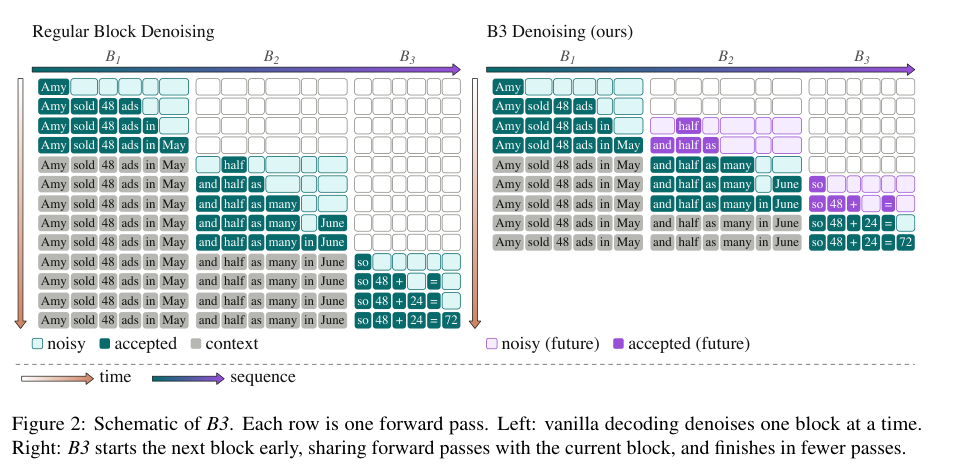
Figure 2 on PDF page 2, including its original caption; copyright remains with the authors. Its model decoding is not a local execution.
Equations
Let H denote token entropy and r the rightmost cumulatively accepted position. When the frontier advances without an active future block, collect the previous pass's maximum entropy strictly left of the new frontier:
Spawn on the next pass only when the current maximum entropy is at most the threshold and no EOS is predicted. Candidates carry across blocks. Using current-pass entropy, including the frontier token, or collecting candidates while a future block is active changes the method.
flowchart LR
  A[Current entropy and accumulated frontier] --> B{Frontier advances without future block}
  B --> C[Previous-pass entropy left of frontier]
  C --> D[Mean candidate threshold across blocks]
  D --> E{Entropy gate and no EOS}
  E --> F[Future block shares the next forward pass]
Paper results
The authors report average TPS improvements of 11.5–14.5% over ten benchmarks using DiffusionGemma 26B and LLaDA 2.1 mini 16B/flash 100B. Per-model average quality changes are −0.40, +0.76, and −0.28 percentage points; not every result improves. No production A/B is reported. Local attention invariance is not evidence of generation quality or TPS.
Local component
Inputs and code
SpawnGate consumes caller-supplied entropy, acceptance flags, and EOS state; it does not invent predictions. block_causal_mask builds two-block visibility. Synthetic checks cover the one-pass lag, active-future exclusion, EOS, cross-block thresholds, and equality of current-block softmax-attention outputs with a standalone forward pass.
PYTHONPATH=src python -c 'from auto_research.foundation_models.b3 import diagnostic; print(diagnostic(42))'
Evidence and limitations
Three-seed CPU metrics support only these control/arithmetic checks. Native samplers, noise schedules, KV caches, EOS decoding, and self-editing backbones are not integrated; no shared forward pass generates text. The module rejects CUDA and requires no GPU receipt.
Full experiment not reproduced
The paper uses two A100 40GB GPUs for 26B, two H200 141GB GPUs for 100B, and one A100 40GB for 16B, plus thousands of long-output tasks and decoding ablations. Fitting one model on one GPU does not make the full matrix cheap. Too costly; not reproduced (review DONE). No weights or trial inference were downloaded or launched.