ArchSpace: comparable budgets for architecture research
L1 arithmetic component. It evaluates published loss-surface coefficients and budget relations. It is not architecture search and does not execute Evolve candidates.
Paper information
| Field | Value |
|---|---|
| Paper | arXiv:2611.17332v1; fixed text |
| Institution/company | Jie Wang: Shanghai AI Laboratory / East China Normal University, in byline order |
| Original release | November 12, 2026, 18:59:52 UTC; announced November 13 |
| Authors' code | InternLM/archspace, Apache-2.0; reviewed commit 002e48df32c880898b0813e02c0439544b35cc85. A proposal/record repository does not establish execution of all training data and fitting scripts |
| Local adapter/key | archspace; adapter null; no Evolve integration |
| Local code | src/auto_research/foundation_models/archspace.py; tests/test_nov15_foundation.py |
Original paper
Motivation and changes
Reusing a baseline's best hyperparameters can hide architecture gains, while rankings can reverse after learning-rate decay. ArchSpace connects proposals, matched-data/tokenizer compute ladders, longer training and auditable records. Its settings progress from baseline-optimal points to IsoFLOP size sweeps and joint LR/batch sweeps. Validation averages eleven domains equally rather than weighting large domains more. Sections 3–4
Key original figure
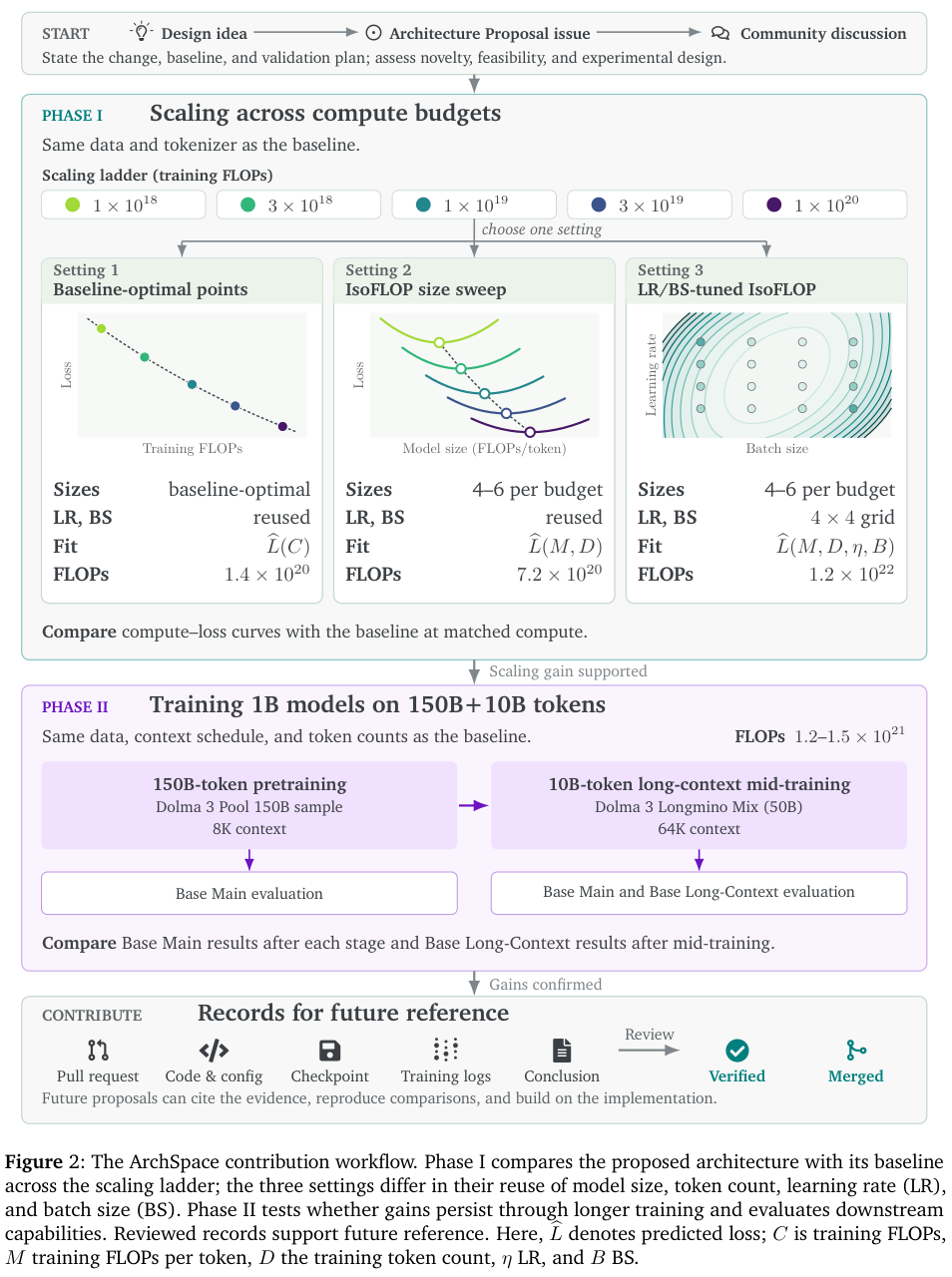
Figure 2 and caption, fixed-v1 PDF page 3; CC BY 4.0, copyright retained by the authors. Its workload costs are not local execution records. Provenance.
Equations
\(M\) denotes training FLOPs per token, not parameter count; \(D\) denotes tokens and \(C=MD\):
Optimal LR, batch size and penalty height follow power laws in \(M,D\). For \(e=\log(\eta/\eta^*)\) and \(b=\log(B/B^*)\):
The conditional optimum is therefore \(\eta=\eta^*\sqrt{B/B^*}\), not an independently chosen LR. The paper fits the base to each model/budget group's minimum loss, freezes it, then fits the hyperparameter penalty to all runs. Local code does not refit: it uses published Qwen3.5/OLMo3 coefficients from Tables 1–2. Section 4.2
Paper results
The authors report approximately 0.25%/0.27% all-run loss-prediction MAPE for the two baselines. These are their fits and validation, not local model results. No production A/B is reported. The coefficients cannot automatically be transferred to arbitrary new architectures.
Local component
Inputs and code
CoupledLaw.base_loss/recipe/loss/budget_optimum evaluate the published surface, LR/batch coupling and analytic optimum under fixed FLOPs. Only CPU standard-library arithmetic is used: no corpus, model training, paper retrieval, scaling-law fitting, or Evolve execution.
PYTHONPATH=src python -c 'from auto_research.foundation_models.archspace import diagnostic; print(diagnostic(42, device="cpu"))'
Controls and limits
Controls check budget conservation, zero penalty at the published recipe, the square-root LR/batch relation, and neighboring sizes around the budget optimum. Repeating seeds does not create independent evidence. Invalid/nonfinite budgets and CUDA requests fail explicitly.
Full experiment not reproduced
Phase I has five compute budgets, 4–6 sizes per budget and LR/batch grids; Phase II trains 1B models on 150B pretraining plus 10B long-context tokens. Too costly; not reproduced (review DONE). No corpus/weights, full matrix or automatic retry is initiated.