简体中文 · English
DPO: Direct Preference Optimization
Implements closed-form preference classification for chosen/rejected responses relative to a reference policy, without training a reward model or collecting online rollouts.
Paper information
| Field | Details |
|---|---|
| Paper | Direct Preference Optimization: Your Language Model is Secretly a Reward Model |
| Institution | Stanford University |
| First public release | 2023-05-29 |
| Author code | Public author code. |
| Local adapter or method key | dpo |
| Local reproduction code | src/auto_research/post_training/ |
Original paper summary
Background and main changes
Conventional RLHF fits a reward model and then optimizes the policy with PPO, making training complex and unstable. DPO starts from the optimum of KL-regularized RLHF, writes the implicit reward as a policy-to-reference log ratio, and reduces training to binary classification on preference pairs.
flowchart LR
    X["Prompt and chosen/rejected responses"] --> P["Policy log-probability"]
    R["Frozen reference log-probability"] --> M["Relative log-ratio margin"]
    P --> M
    M --> L["Log-sigmoid preference loss"]
    L --> U["Update policy without reward model or rollouts"]
Key figure from the paper
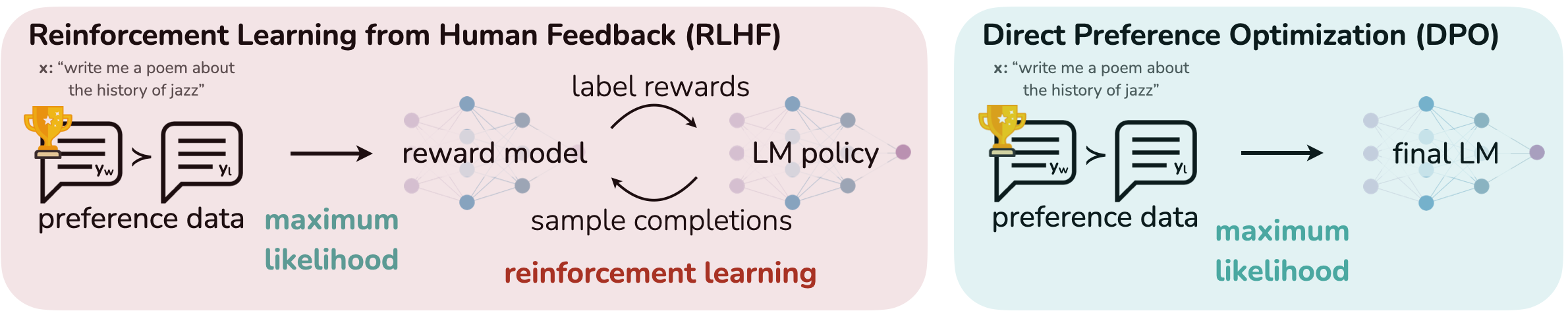
Figure 1: Overall design and components. From the paper; copyright belongs to the authors. Click for the source.
Core equations
Offline and online results
The paper beats PPO-based RLHF on sentiment control and matches or exceeds PPO for summarization and single-turn dialogue, with a simpler training path. The automatic and human evaluations are offline, not production A/B.
Local reproduction
On the common GSM8K candidate protocol, use the gold candidate as chosen and the highest-scoring incorrect candidate as rejected. Record the reference-corrected preference margin.
| Metric | Untrained policy | DPO |
|---|---|---|
| Accuracy | 0.1641 | 0.8047 |
| Mean reward | 0.3126 | 0.8347 |
| KL(reference) | 0.0000 | 0.0683 |
auto-research post-train --algorithm dpo \
  --dataset gsm8k-candidate --maximum-examples 512 \
  --steps 300 --seed 42 --offline
Stable metrics: classic-post-training-gsm8k-seed42.json.
Scope
Implements DPO's reference-relative pairwise loss and margin. Candidate policies can calculate whole-response probabilities exactly, but no autoregressive LLM was trained and no Anthropic HH or TL;DR preference dataset was reproduced.