SPIN: iterative fine-tuning by self-play
Implements iteration state: previous policies generate negatives, human and self-generated responses are contrasted, and the opponent is refreshed periodically. Candidate sampling is not a full LLM rollout.
Paper information
| Field | Details |
|---|---|
| Paper | SPIN |
| Organization | University of California, Los Angeles |
| First public release | 2024-01-02 |
| Authors' code | uclaml/SPIN |
| Adapter / method | spin |
| Local reproduction code | src/auto_research/post_training/ |
Original paper
Motivation and method
Additional preference annotation is costly. Starting from an SFT model, SPIN uses the previous model to answer training prompts, treats human demonstrations as positives and self-generated answers as negatives, and trains the next model with a self-play discriminative objective. This repeats without new human preference labels.
flowchart LR
    H["Human SFT demonstrations"] --> P["Preference objective"]
    O["Previous policy"] --> S["Sample self-generated answers"]
    S --> P
    P --> N["Train the next policy"]
    N --> O
Key figure from the paper
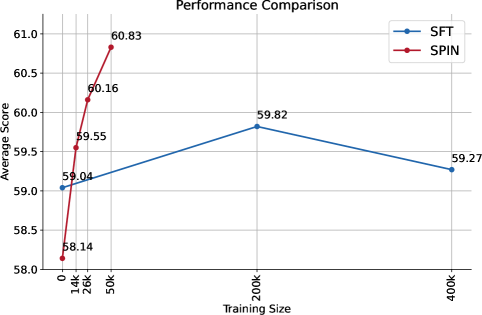
Figure 4: Training flow and key optimization steps. From the original paper; copyright remains with the authors.
Core equation
Paper results
The paper reports successive gains on HuggingFace Open LLM Leaderboard, MT-Bench, and BIG-Bench. Without additional GPT-4 preferences, it beats a DPO model trained on extra GPT-4 preferences. No production online A/B is reported.
Local reproduction
The previous candidate policy samples negatives and is refreshed every 16 updates.
| Metric | Untrained policy | SPIN |
|---|---|---|
| Accuracy | 0.1641 | 0.8594 |
| Mean reward | 0.3126 | 0.8691 |
| KL(reference) | 0.0000 | 0.1294 |
| Opponent refreshes | 0 | 18 |
auto-research post-train --algorithm spin --dataset gsm8k-candidate \
  --maximum-examples 512 --steps 300 --seed 42 --offline
See the stable metrics.
Reproduction boundaries
Implements a frozen opponent, self-play sampling, reference-relative preference loss, and iteration refresh. No real text generation, distributed training, or paper-scale model is used.