简体中文 · English
ORPO: Incorporating preference odds directly into SFT
ORPO uses a single model for supervised learning and preference separation, without a frozen reference model.
Paper information
| Field | Details |
|---|---|
| Paper | ORPO: Monolithic Preference Optimization without Reference Model |
| Institution | KAIST |
| First public release | 2024-03-12 |
| Author code | Released: xfactlab/orpo |
| Local adapter or method key | orpo |
| Local reproduction code | src/auto_research/post_training/ |
Original paper summary
Background and main changes
Standard alignment often uses SFT followed by a reference-relative preference objective. ORPO combines the chosen response's NLL and a chosen-versus-rejected odds-ratio penalty into one objective. Near probabilities of 0 or 1, odds provide a more sensitive contrastive signal than raw probability differences.
flowchart LR
    X["Prompt"] --> C["Chosen response"]
    X --> R["Rejected response"]
    C --> S["SFT NLL"]
    C --> O["Log odds ratio"]
    R --> O
    S --> L["ORPO loss"]
    O --> L
    L --> P["Single policy; no reference model"]
Key figure from the paper
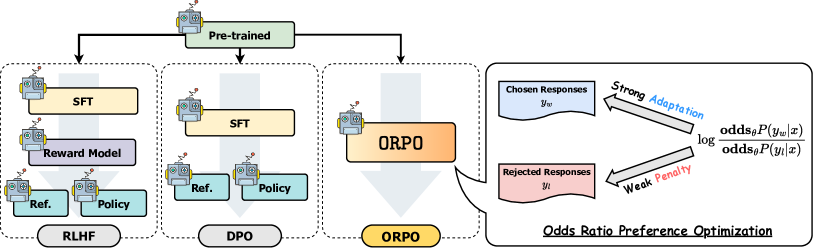
Figure 2: Overall design and components. From the paper; copyright belongs to the authors. Click for the source.
Core equations
Offline and online results
The paper's Mistral-ORPO-\(\beta\) reaches 12.20% on AlpacaEval 2.0, 66.19% on IFEval, and 7.32 on MT-Bench. These are offline results; no production online A/B test is reported.
Local reproduction
| Metric | Untrained policy | ORPO |
|---|---|---|
| Accuracy | 0.1641 | 0.8438 |
| Mean reward | 0.3126 | 0.8618 |
| KL(reference, diagnostic only) | 0.0000 | 0.8973 |
Final-step SFT NLL is 0.0715, and chosen/rejected log-odds margin is 6.3502. The objective has no reference-model parameters.
auto-research post-train --algorithm orpo \
  --dataset gsm8k-candidate --maximum-examples 512 \
  --steps 300 --seed 42 --offline
Stable metrics: classic-post-training-gsm8k-seed42.json.
Scope
The implementation uses a single-stage update with chosen SFT and the odds-ratio preference penalty. The local response action is a complete candidate. It does not train the paper's Mistral/Llama models, and KL is reported uniformly but does not enter the objective.
The candidate kernel src/auto_research/post_training/algorithm_families/family_1.py adds 1e-12 to the p and 1-p log-odds terms and computes the preference loss with logaddexp(0, -margin). This reduces the numerical risks of taking log zero or computing softplus directly. The constant is a local safeguard, not a paper hyperparameter. Complete-candidate probabilities are not real language-model token response probabilities.