简体中文 · English
DAPO: Decoupled clipped policy optimization for long reasoning
DAPO adds asymmetric clipping, dynamic sampling, token-level loss, and overlong reward shaping to GRPO-style online training, addressing entropy collapse and uninformative batches.
Paper information
| Field | Details |
|---|---|
| Paper | DAPO: An Open-Source LLM Reinforcement Learning System at Scale |
| Institution | ByteDance Seed / Tsinghua University AIR |
| First public release | 2025-03-18 |
| Author code | Released: BytedTsinghua-SIA/DAPO |
| Local adapter or method key | dapo |
| Local reproduction code | src/auto_research/post_training/ |
Original paper summary
Background and main changes
Standard symmetric clipping can suppress exploration in online RL for long chains of thought, and groups with all correct or all wrong answers offer no learning signal. DAPO's Clip-Higher gives more room to increase probabilities; Dynamic Sampling discards zero-variance groups; token-level loss handles responses of different lengths fairly; and overlong responses receive a piecewise penalty.
flowchart LR
    Q["Prompt"] --> G["Group rollout"]
    G --> D{"Reward variance?"}
    D -->|No| S["Dynamically skip"]
    D -->|Yes| A["Group advantage"]
    A --> T["Token-level loss"]
    O["Old policy"] --> C["Clip-Higher"]
    C --> T
    G --> L["Overlong shaping"]
    L --> T
    T --> U["Policy update"]
Key figure from the paper
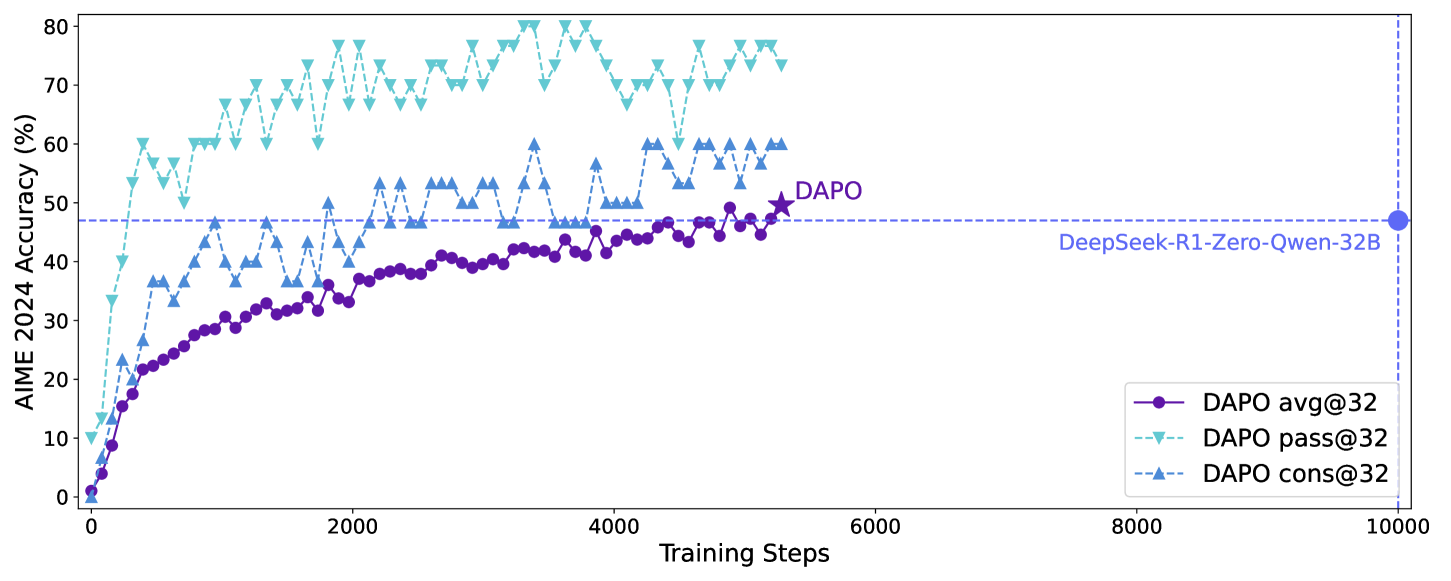
Figure 1: The training pipeline and key optimization stages in the paper. From the paper; copyright belongs to the authors. Click for the source.
Core equations
where \(\epsilon_{\mathrm{high}}>\epsilon_{\mathrm{low}}\). Dynamic sampling retains only groups with \(\operatorname{std}(r_1,\ldots,r_G)>0\).
Offline and online results
With Qwen2.5-32B, DAPO scores 50 on AIME 2024 and reportedly surpasses the earlier DeepSeek-R1-Zero-Qwen-32B setting in roughly half the training steps. No production A/B test is reported.
Local reproduction
| Metric | Untrained policy | DAPO |
|---|---|---|
| Accuracy | 0.1641 | 0.7578 |
| Mean reward | 0.3126 | 0.7996 |
| KL(reference) | 0.0000 | 1.0870 |
The old policy is refreshed 18 times in 300 steps. Final-step diagnostics are low/high clipping 0.20/0.28, clip fraction 0.25, average pseudo-token count 2.25, and overlong penalty 0.0125.
auto-research post-train --algorithm dapo \
  --dataset gsm8k-candidate --maximum-examples 512 \
  --steps 300 --group-size 4 --seed 42 --offline
Stable metrics: classic-post-training-gsm8k-seed42.json.
Scope
The implementation runs the four training mechanisms and old-policy rollouts. Candidate lengths are simulated with deterministic pseudo-token lengths. It does not reproduce 32B long chain-of-thought generation, distributed training, real token masks, or the AIME verifier.