CoRD: use maximal coupling to change which states distillation visits
Paper information
| Field | Value |
|---|---|
| Paper | arXiv 2611.07959; pinned v1 full text |
| Original title | CoRD: Coupled Rollouts Fill the Blind Spot of On-Policy Distillation |
| Company / institution | First author Guhan Chen: Tsinghua University. Collaborators include Harbin Institute of Technology, Shenzhen; Nanjing University; and Huawei Large Model Data Technology Lab |
| Original publication | arXiv v1: 2026-11-05 12:55:51 UTC; announced on 2026-11-06 |
| Original author code | No CoRD implementation by the authors was found in pinned v1 or a targeted search. The cited evaluation tool is not the CoRD code |
| Local adapter / key | cord-rollout; adapter: null, no Evolve integration. Distinct from the cataloged conflict-aware gradient CORD paper |
| Local code | src/auto_research/post_training/cord_rollout.py |
| Implementation status | component_only: CPU one-position coupled sampling, L1 diagnostic |
| Full experiment | Not reproduced because of excessive cost (review DONE); not_reproduced_high_cost |
Original method
Motivation and change
In ordinary OPD, a teacher scores prefixes the student actually visits, which provides little supervision for teacher-preferred paths the student rarely takes. CoRD retains per-state reverse KL and changes how prefixes are generated. The student proposes a token; maximal coupling corrects that proposal toward a teacher-leaning target. Both probability vectors must score the same prefix over the same vocabulary. It borrows the rejection rule of speculative decoding, not a claim of faster serving.
flowchart LR
    S[Student and teacher probabilities at the same prefix] --> Q[Geometric interpolation]
    S --> P[Student token proposal]
    P --> A{Acceptance ratio test}
    Q --> A
    A -->|accept| E[Emit the proposed token]
    A -->|reject| R[Draw from the positive residual]
    R --> E
    E --> T[Advance prefix; keep the per-state loss]
Original paper figure
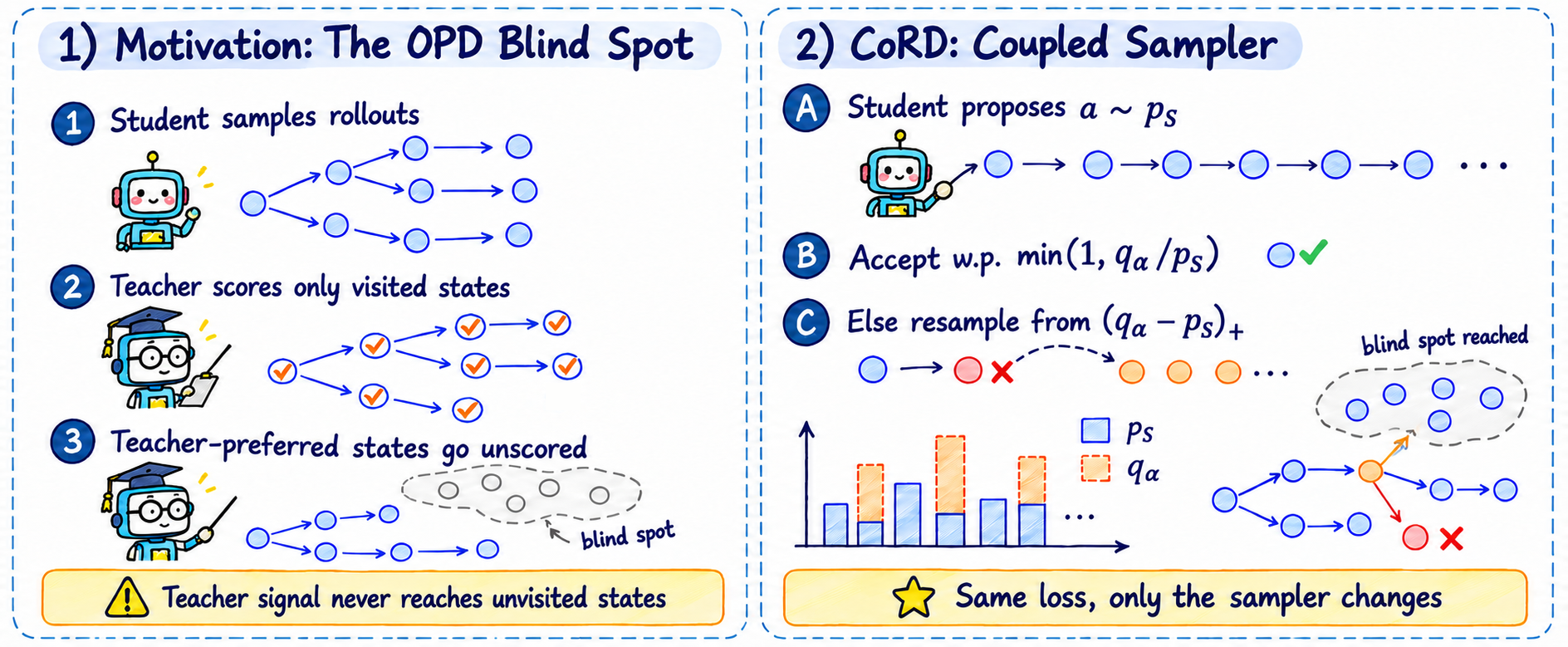
Figure 1 is from the original paper, using the author's PNG unchanged. Copyright remains with the authors; the paper uses the arXiv perpetual non-exclusive license. Source, checksum and visual review are in assets/provenance.json.
Equations
At a fixed prefix, Eq. (2) in Section 3 geometrically interpolates student \(p_S\) and teacher \(p_T\) to form the emitted-token marginal:
Algorithm 1 proposes \(a\) from \(p_S\), accepts it with probability \(\min(1,q_\alpha(a)/p_S(a))\), and otherwise draws from the normalized positive residual \((q_\alpha-p_S)_+\). The emitted mass at each token is \(\min(p_S,q_\alpha)+(q_\alpha-p_S)_+=q_\alpha\). Replacement probability equals \(\mathrm{TV}(p_S,q_\alpha)\), not a fixed rate. At \(\alpha=0\) the marginal is the student, and at \(\alpha=1\) it is the teacher. Intermediate targets are not linear mixtures, and \(q_\alpha\) does not replace the distillation target. The original per-state training loss is still \(D_{\mathrm{KL}}(p_S\|p_T)\).
Reported outcomes, not local results
For six Qwen3/Qwen3.5 students across five math benchmarks, Table 1 reports mean pass@1 gains of about 0.9 to 2.0 percentage points over OPD and pass@8 gains of 1.2 to 3.4 points. Table 6 does not show higher pass@16 for every student: the five-task mean for Qwen3-1.7B goes from 47.5% to 47.4%. Appendix A identifies one MATH500 question duplicated between training and evaluation. No production online A/B is reported. These are not local scores.
Local implementation
Data protocol and code mapping
maximal_coupling takes normalized same-vocabulary probabilities at one prefix and builds the target, keep probabilities, positive residual and TV using a log-space interpolation. Coupling.draw returns the proposal and emitted token using a caller-provided RNG. It does not load models, generate LLM trajectories or run reverse-KL training. For \(0<\alpha<1\), only the support intersection has mass. Empty intersection is rejected, not silently replaced by uniform or ordinary teacher sampling.
PYTHONPATH=src python -m pytest tests/test_nov06_llm.py -q
PYTHONPATH=src python -c 'from auto_research.post_training.cord_rollout import diagnostic; print(diagnostic(42))'
Results, negative controls and boundaries
On Appendix D's three-token example with \(p_S=(0.6,0.3,0.1)\), \(p_T=(0.2,0.3,0.5)\) and \(\alpha=0.6\), the analytic replacement rate is approximately 0.24449. CPU seeds 42/43/44 each run 4096 categorical draws. Maximum empirical marginal and replacement-rate errors are about 0.01741 and 0.01793; the analytic identity's error is below \(10^{-12}\). Uniform replacements incorrectly restore mass to a token already overweighted by the student. Tests cover that control, disjoint and zero-mass supports, endpoints and RNG stream consistency. These are not math capability or pass@k results.
High-cost full experiment
Appendix A pairs six 0.6B-to-4B students with 8B/9B teachers. Main training uses 80 steps, 256 prompts per step and up to 320 new tokens per rollout. Table 1's twelve configurations cost about 670 accelerator-hours for training alone, before evaluation on 1,919 problems with 16 samples per problem per model. The full matrix exceeds the budget of one A100/A30 or a local Mac: not reproduced because of excessive cost (review DONE). No weights or datasets are downloaded, and no automatic retry is queued.