Wide & Deep
Fidelity: core mechanism. Combines memorizing wide feature crosses with a generalizing deep tower.
Paper information
| Field | Details |
|---|---|
| Paper | arXiv 1606.07792 |
| Organization | |
| First public release | 2016-06-24 (arXiv v1) |
| Authors' code | Public implementation |
| Adapter / method | wide-deep |
| Local reproduction code | src/auto_research/reproductions/wide_deep/ |
Original paper
Motivation and method
Linear models memorize sparse co-occurrences but generalize poorly. A pure DNN generalizes but may recommend irrelevant combinations. The paper trains both paths jointly and shares the final logit.
flowchart LR
  A["Sparse features"] --> W["Wide feature crosses"]
  A --> E["Embedding"] --> D["Deep MLP"]
  W --> S["Joint logit"]
  D --> S
Key figure from the paper
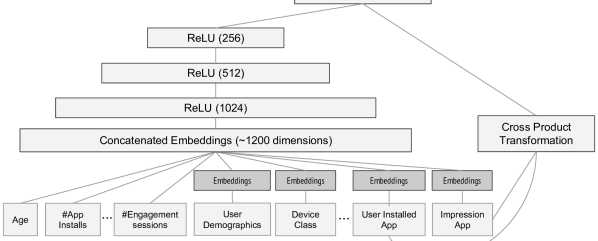
Figure 4: Core architecture, modules, and their connections. From the original paper; copyright remains with the authors.
Core equation
Paper results
In a three-week Google Play online experiment, Wide & Deep increased app acquisitions by 3.9% against the wide control and about 1% against the deep model.
Local reproduction
Local comparison: The baseline is a parameter-matched deep-only model; the treatment adds a wide path crossing candidate and genre. Three-seed full-catalog MovieLens-100K NDCG@10 improves +5.45% relative.
See the structured results.
Reproduction boundaries
Public MovieLens substitutes for private Google Play logs. Production feature engineering, distributed training, and serving were not reproduced.