Switch Transformer
Core mechanism: per-token top-1 routing and an auxiliary load-balancing loss.
Paper information
| Field | Details |
|---|---|
| Paper | arXiv 2101.03961 |
| Institution | Google Brain. |
| First public release | 2021-01-11 (arXiv v1) |
| Author code | Author implementation in Mesh TensorFlow. |
| Local adapter or method key | switch-transformer |
| Local reproduction code | src/auto_research/reproductions/switch_transformer/ |
Paper method and evidence
Replace dense FFNs with sparse experts. Each token activates one expert, expanding parameter capacity at approximately fixed FLOPs.
flowchart LR
  X[Token states] --> G[Top-1 router]
  G --> E1[Expert 1]
  G --> E2[Other experts]
  E1 --> Y[Combined states]
  E2 --> Y
Original paper figure
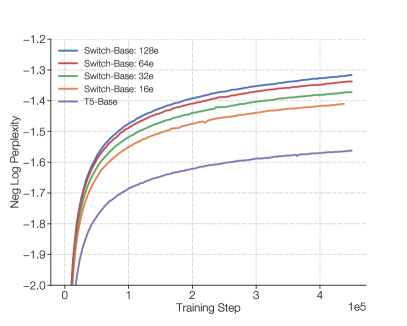
Figure 1 illustrates the single-expert routing path. From the original paper; copyright remains with the authors.
Core equation
\[
e(x)=\arg\max_i p_i(x),\quad y=p_{e(x)}(x)E_{e(x)}(x),\quad
L_{\rm aux}=N\sum_i f_i\bar p_i.
\]
Reported results
The paper reports about 7× faster pretraining than T5-Base and scales to 1.6T parameters. No online A/B.
Local reproduction
A parameter-budgeted dense Transformer is the control; the intervention uses four experts and top-1 routing. At 30 WikiText-2 steps, local perplexity was 3.29% lower. Seed-42 metrics.
No trillion-parameter training, expert capacity overflow, or cross-device all-to-all was reproduced.