Mamba
Fidelity: core mechanism. Implements an input-dependent selective SSM, causal depthwise convolution, and gated output.
Paper information
| Field | Details |
|---|---|
| Paper | arXiv 2312.00752 |
| Organization | Carnegie Mellon University / Princeton University |
| First public release | 2023-12-01 (arXiv v1) |
| Authors' code | Public implementation |
| Adapter / method | mamba |
| Local reproduction code | src/auto_research/reproductions/mamba/ |
Original paper
Motivation and method
Mamba makes the SSM step size and read/write vectors depend on the current token. This selectively retains information while keeping computation linear in sequence length.
flowchart LR
  X["Token"] --> C["Causal Conv1D"]
  C --> P["Input-dependent Δ,B,C"]
  P --> S["Selective scan"]
  X --> G["Gate"]
  S --> O["Output"]
  G --> O
Key figure from the paper
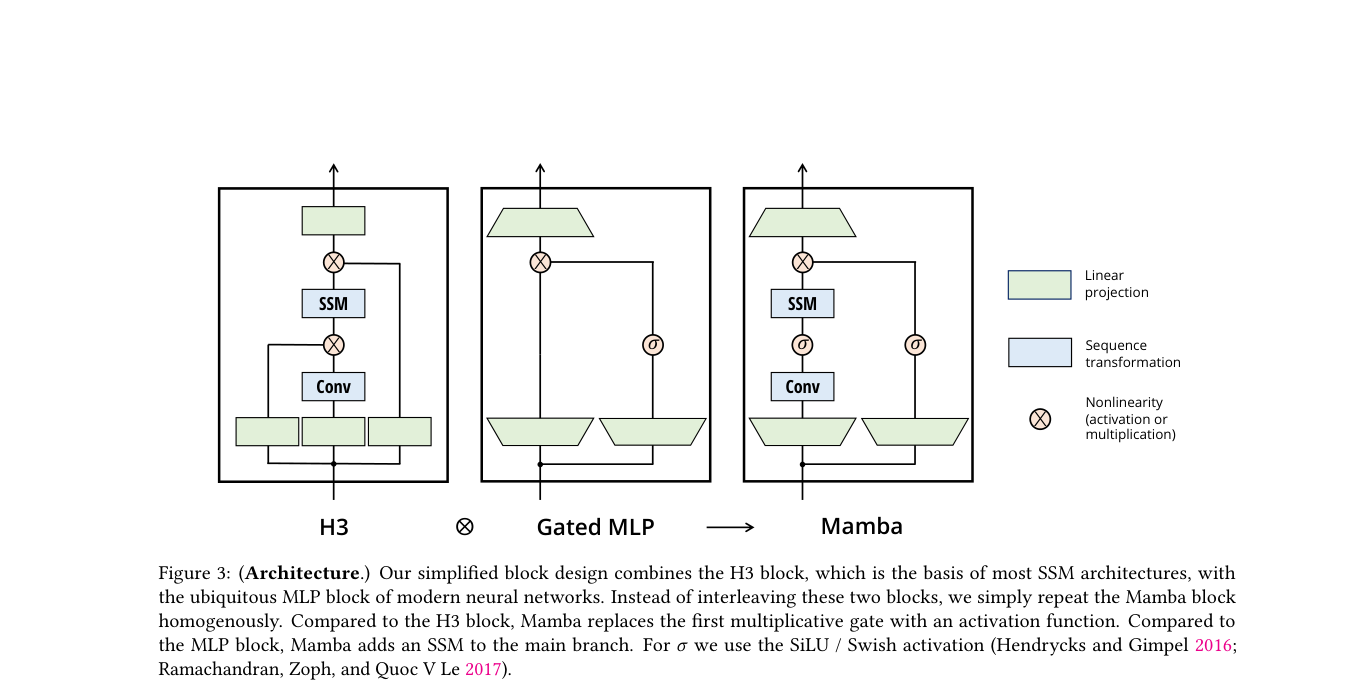
Figure 3: Core architecture, modules, and their connections. From the original paper; copyright remains with the authors.
Core equations
Paper results
The paper matches or beats Transformers on language, audio, and genomics tasks and reports up to about 5× inference throughput and linear sequence-length scaling. It does not report an online A/B test.
Local reproduction
Local comparison: A tiny Transformer is the baseline; a native PyTorch selective scan is the treatment. Thirty-step WikiText-2 perplexity is +48.82% relative, a deterioration.
See the structured result.
Reproduction boundaries
The fused parallel-scan CUDA kernel and 2.8B-scale pretraining were not used. Short-budget results do not establish paper-scale conclusions.