简体中文 · English
HSTU: Hierarchical Sequential Transduction Units
Fidelity: core-mechanism reproduction. Runs UVQK SiLU projection, non-softmax pointwise aggregation, relative position bias, post-pooling normalization, U-gate, residuals, and all-position generative training. It does not reproduce heterogeneous action/time tokens, stochastic-length kernels, M-FALCON, or trillion-parameter serving.
Paper information
| Field | Details |
|---|---|
| Paper | arXiv 2402.17152 |
| Institution | Meta |
| First public release | 2024-02-27 (arXiv v1) |
| Author code | Official author code |
| Local adapter or method key | hstu |
| Local reproduction code | src/auto_research/reproductions/hstu/ |
Original paper summary
Background and main changes
Industrial recommendation histories include different action types and are much longer and larger than conventional next-item data. HSTU unifies recommendation as generative sequence modeling. A transduction layer for sparse long histories replaces the standard Transformer's softmax attention and separate FFN.
flowchart LR
    S["Action / item sequence"] --> E["Item + position embedding"]
    E --> P["SiLU UVQK projection"]
    P --> A["Causal pointwise aggregated attention + relative bias"]
    A --> N["Post-pooling normalization"]
    N --> G["U gate"]
    G --> R["Output projection + residual"]
    R --> O["Next-item logits for all positions"]
Key figure from the paper
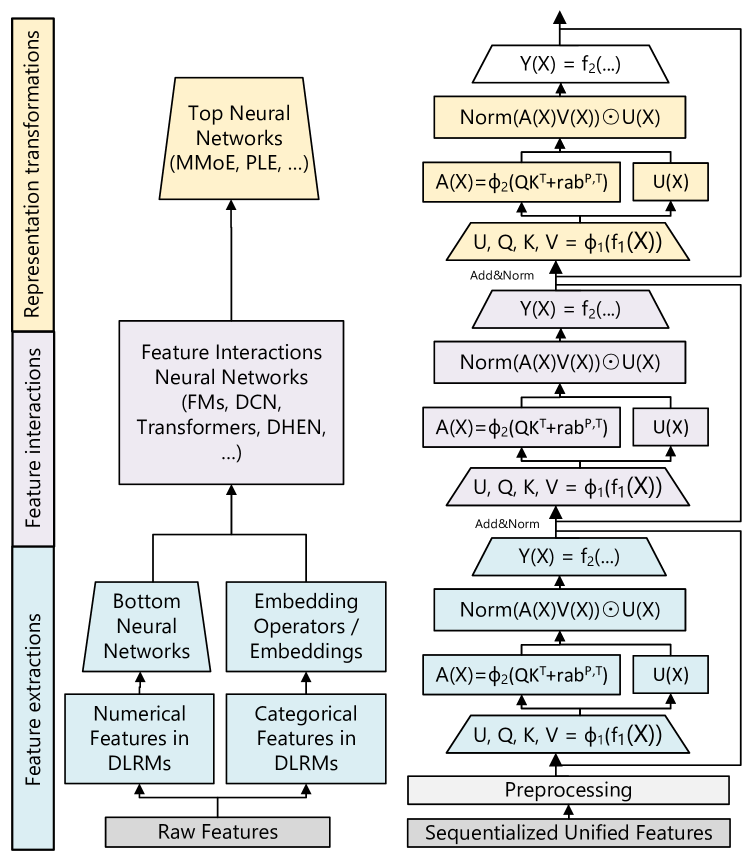
Figure 3: Overall design and components. From the paper; copyright belongs to the authors. Click for the source.
Core equations
An HSTU layer first computes \(U,V,Q,K=\operatorname{SiLU}(\operatorname{Norm}(X)W_{UVQK})\), then
with causal masking. Unlike standard attention, there is no softmax normalization. Training uses sampled-softmax next-item prediction at all valid sequence positions.
Offline and online results
- Offline MovieLens-1M HR@10/NDCG@10: SASRec 0.2828/0.1545, HSTU 0.3043/0.1700 (+7.6%/+10.1%), HSTU-large 0.3306/0.1858.
- In a Meta production ranking A/B test, the generative recommender improves engagement by +12.4% and consumption by +4.4% against DLRM.
Local reproduction
Local comparison: SASRec is matched for dimensions, layers, heads, loss, and training steps. HSTU NDCG@10 falls from 0.04389 to 0.03611 (-17.73%). This is a matched-budget model comparison, not against DIN.
MovieLens-100K has 932 valid users and 1,682 items, with chronological leave-two-out and full-catalog ranking. HSTU and SASRec use 64 dimensions, 2 layers, 2 heads, the same sampled-softmax objective, and 320 steps, with seeds 42/43/44 on Apple MPS.
| Model | Hit@10 | NDCG@10 | Head share@10 |
|---|---|---|---|
| Matched SASRec | 0.09156 ± 0.00182 | 0.04389 ± 0.00160 | 0.90665 |
| HSTU | 0.07761 ± 0.00253 | 0.03611 ± 0.00208 | 0.93877 |
HSTU NDCG@10 is -17.73% versus matched SASRec, with the same direction on all three seeds. MovieLens has only one rating event type and shorter histories, lacking the heterogeneous action/time signals HSTU was designed for. This verifies the core layer and training path; the small-data negative result cannot be extrapolated to industrial scale.
See metrics/movielens-100k-seeds42-44.json.