Counteracting Duration Bias in Video Recommendation via Counterfactual Watch Time
Fidelity: core mechanism. Paper results, public-data measurements, and omissions are reported separately.
Paper information
| Field | Details |
|---|---|
| Paper | arXiv 2406.07932 |
| Organization | Kuaishou Technology / Renmin University of China |
| First public release | 2024-06-12 (arXiv v1) |
| Authors' code | Public implementation |
| Adapter / method | cwm |
| Local reproduction code | src/auto_research/reproductions/cwm/ |
Original paper
Motivation and method
Use counterfactual watch-time estimation to remove video-duration bias, distinguishing observed watch time from potential utility under a common duration intervention.
flowchart LR
 A["Public input or history"] --> B["CWM core path"]
 B --> C["Paper-specific state or objective"]
 C --> D["Matched-budget evaluation"]
Key figure from the paper
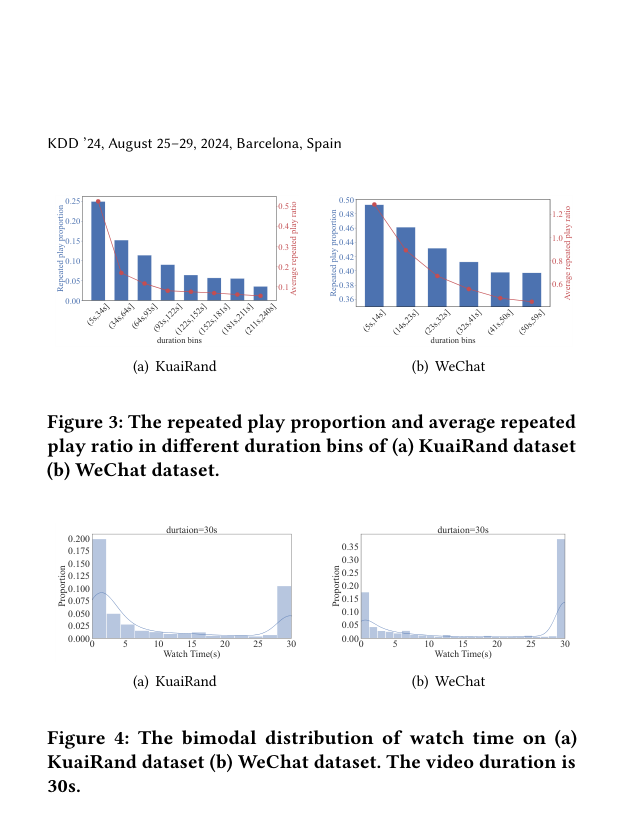
Figure 4: Overview of the paper's method and key components. From the original paper; copyright remains with the authors.
Core equations
Paper results
Kuaishou mean watch time +2.9%, video views +2.5%, and CTR +0.3%.
Local reproduction
Local comparison: The baseline is the shared transition + content scorer. Adding only the CWM core mechanism changes NDCG@10 by -17.89% relative.
MovieLens-100K, 260 users and 420 items, seed 42: NDCG@10 0.0354 → 0.0291 (-17.89%).
auto-research reproduce --paper cwm --dataset-dir data --seed 42
auto-research evolve --model rankmixer --dataset movielens-100k --direction "组合 cwm 与已安装论文算子" --generations 2 --population 4
See the fixed metrics.
Reproduction boundaries
Full-catalog MovieLens-100K exercises the paper's core state, objective, or inference path. No private features, production traffic, or online serving are used. Paper A/B results are cited separately and local numbers do not represent the original large model, data, traffic, or custom kernels.