TWIN V2: Scaling Ultra-Long User Behavior Sequence Modeling for Enhanced CTR Prediction at Kuaishou
Fidelity: core mechanism. Paper conclusions, local public-data experiments, and omitted work are reported separately.
Paper information
| Field | Details |
|---|---|
| Paper | CIKM 2024 |
| Organization | Kuaishou |
| First public release | 2024-07-23 (arXiv v1) |
| Authors' code | The paper did not supply official or author code when checked on 2026-08-09. |
| Adapter / method | twin-v2 |
| Local reproduction code | src/auto_research/reproductions/twin_v2/ |
Original paper
Motivation and method
Offline hierarchical clustering compresses millions of lifetime behaviors into virtual items with cluster-size information. Online, GSU retrieves relevant clusters and ESU fine-ranks with cluster-aware target attention.
flowchart LR
 A["Public input"] --> B["TWIN V2 core mechanism"]
 B --> C["Matched-budget training or execution"]
 C --> D["Public evaluation and diagnostics"]
Key figure from the paper
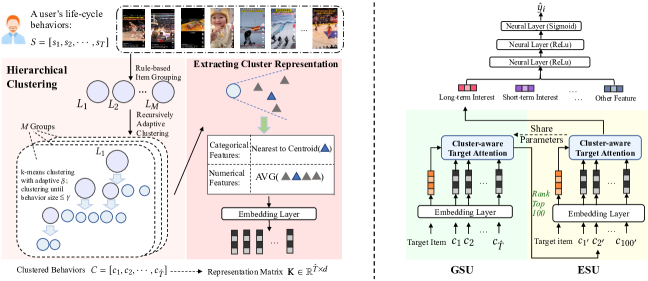
Figure 2: Overview of the paper's method and key components. From the original paper; copyright remains with the authors.
Core equations
Paper results
Kuaishou reports watch time +0.672%/+0.800%/+0.728% across three scenarios, serving the main traffic of around 400 million DAU.
Local reproduction
Local comparison: The
shared transition + content baselineandTWIN-V2treatment differ only in the core mechanism.ndcg_at_10rises from 0.0354 to 0.0433, or +22.45% relative.
See the fixed metrics.
Reproduction boundaries
Full-catalog MovieLens-100K ranking exercises paper-related candidate-aware retrieval, hierarchical compression, or distillation. No private logs or production serving are used; online A/B comes only from the paper and must remain separate from local relative changes.