简体中文 · English
Native Sparse Attention: Trainable three-branch sparse attention
Fidelity: core-mechanism reproduction. Trains compression, selection, and sliding-window attention branches. The Triton kernel and 27B training are not reproduced.
Paper information
| Field | Details |
|---|---|
| Paper | arXiv 2502.11089 |
| Institution | DeepSeek |
| First public release | 2025-02-16 (arXiv v1) |
| Author code | No official or author-released code found in the paper (checked 2026-08-09). |
| Local adapter or method key | native-sparse-attention |
| Local reproduction code | src/auto_research/reproductions/native_sparse_attention/ |
Original paper summary
Background and main changes
Full attention compute and KV reads grow quadratically with context length. NSA does not prune after training. From pretraining onward it learns three parallel paths: compressed history blocks for global structure, query-dependent block selection for important detail, and a sliding window for recent precise information. Learned gates blend the three outputs.
flowchart LR
  Q["Query token"] --> C["Compressed blocks"]
  Q --> S["Top-k selected fine blocks"]
  Q --> W["Sliding local window"]
  C --> G["Learned branch gates"]
  S --> G
  W --> G
  G --> O["Sparse attention output"]
Key figure from the paper
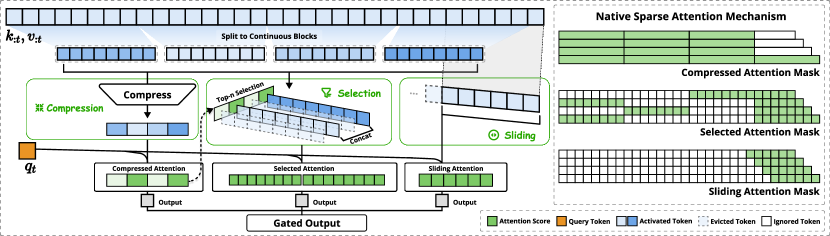
Figure 2: The core architecture, its main modules, and their connections. From the paper; copyright belongs to the authors. Click for the source.
Core equations
Compression aggregates historical blocks. Selection picks top-\(k\) blocks by similarity between \(q_t\) and compressed keys. The sliding branch reads only \([t-w+1,t]\). All three branches remain causal.
Offline and online results
The paper matches or exceeds full attention on general, long-context, and instruction reasoning benchmarks and reports substantial decoding, forward, and backward speedups at 64K. Standalone LLM work is not subject to the online A/B gate. The local PyTorch reference kernel does not reproduce hardware throughput.
Local reproduction
Local comparison: The
llama_modernbaseline matches width, depth, tokens, AdamW, and the 30-step budget. The experimental arm replaces attention with NSA. WikiText-2 LM loss goes from5.7471 to 5.7149(-0.56% relative), and PPL changes -3.17%.
Local sequence length is 64. NSA reads an attention-edge proxy equal to 56.35% of full causal attention. This is an algorithmic edge count, not wall-clock speed. See metrics/wikitext2-seed42.json.
auto-research reproduce --paper native-sparse-attention --dataset-dir data --seed 42
auto-research evolve --model micro-llm --dataset wikitext-2 \
  --direction "组合 Native Sparse Attention、Gated Attention 和 Muon"
Scope
No 27B continued pretraining, 64K benchmark, or custom Triton kernel was run. The result shows the three-branch core trains and helps under this short local budget, not the paper's scale or speed.