FilterLLM: generating a user distribution directly from text
Fidelity: core mechanism. Learns text-to-compressed-user-vocabulary distributions and constrains cold-start representations with behavioral distributions.
Paper information
| Field | Details |
|---|---|
| Paper | arXiv 2502.16924 |
| Organization | Alibaba |
| First public release | 2025-02-24 (arXiv v1) |
| Authors' code | The paper did not supply official or author code when checked on 2026-08-09. |
| Adapter / method | filterllm |
| Local reproduction code | src/auto_research/reproductions/filterllm/ |
Original paper
Motivation and method
Per-user judgments do not scale to cold starts for a billion users. FilterLLM maps product text once to a user distribution, compresses the output space with a user vocabulary, and uses historical behavior to guide distribution learning.
flowchart LR
  T["New-item text"] --> L["Text encoder or LLM"]
  V["Compressed user vocabulary"] --> D["User distribution"]
  L --> D
  B["Historical behavior distribution"] --> G["Behavior guidance"]
  G --> D
  D --> C["Cold-start candidates"]
Key figure from the paper
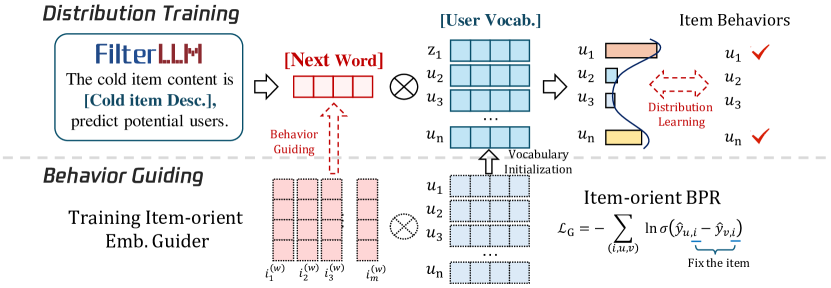
Figure 2: Core architecture, modules, and their connections. From the original paper; copyright remains with the authors.
Core equations
Paper results
Offline cold-start retrieval beats per-user LLM judgment. Online against ColdLLM: Cold-PV +5.13%, PCTR +3.93%, GMV +10.86%, and inference time -97.12%.
Local reproduction
Local comparison: NDCG@10 is
-9.82%against a content-to-item judgment baseline.
On the same full-catalog MovieLens-1M protocol, NDCG@10 changes 0.07514→0.06776 (-9.82%) and Hit@10 0.14048→0.12619. This negative result shows that genre-text proxies are insufficient to reproduce industrial new-product text gains. See the metrics.
Reproduction boundaries
SVD on public interactions supplies the compressed user vocabulary, not billion-user LLM tokens. There is no Taobao new-product text, traffic, or latency stack.