OneRec-V2: Lazy Decoder and Reinforcement Learning from Real Feedback
Fidelity: full core pipeline. The implementation trains three-level residual-quantized Semantic IDs, newest-impression SFT, the layer-shared K/V Lazy Decoder, Duration-Aware Reward Shaping, and GBPO. It reduces model and data scale and omits private heterogeneous features and distributed serving.
Paper information
| Field | Details |
|---|---|
| Paper | arXiv 2508.20900 |
| Organization | Kuaishou |
| First public release | 2025-08-28 (arXiv v1) |
| Authors' code | No official or author implementation is linked by the paper (checked 2026-08-09). |
| Adapter / method | onerec-v2 |
| Local reproduction code | src/auto_research/reproductions/onerec_v2/ |
Original paper
Motivation and method
OneRec-V1 generates recommendation sessions with an encoder-decoder, repeatedly encoding long histories and relying on a separate reward model for alignment. V2 supervises only the newest impression. A Context Processor computes one set of K/V for all decoder layers, and the target path decodes only [BOS,s1,s2]→[s1,s2,s3]. Lazy blocks apply cross-attention, causal self-attention, and an FFN in order, with GQA, K=V, and cross-layer KV sharing. Post-training uses actual watch duration and negative feedback. DARS corrects duration bias, and GBPO controls positive and negative gradients with dynamic denominators rather than PPO clipping.
flowchart LR
  A[Static, short-term, and long-term context] --> B[Context Processor]
  B --> C[Layer-shared K = V]
  D[BOS, SID-1, SID-2] --> E[Lazy Decoder blocks]
  C --> E
  E --> F[SID-1, SID-2, SID-3]
  G[Real watch duration and dislikes] --> H[DARS reward]
  H --> I[GBPO]
  I --> E
Key figure from the paper
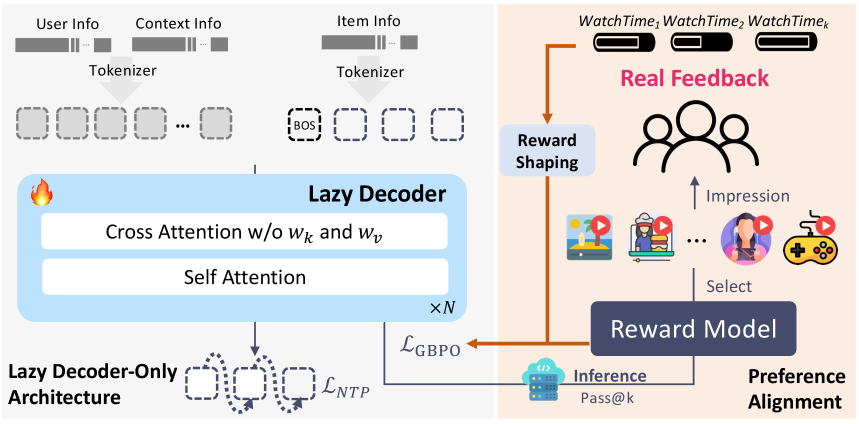
Figure 2: Core architecture, its modules, and their connections. From the original paper; copyright remains with the authors.
Core equations
Newest-impression SFT supervises the three SID levels for the last item only:
DARS buckets videos by duration and computes watch-duration percentiles within each user and bucket:
GBPO uses separate dynamic denominators for positive and negative advantage:
Paper results
At 1B parameters, Lazy Decoder loss is 3.27 versus 3.28/3.26 for standard encoder-decoders. Compute falls from 296.36/204.21 GFLOPs to 18.89 GFLOPs. GQA and KV sharing leave loss almost unchanged.
The one-week online A/B used 5% of traffic on each of Kuaishou and Kuaishou Lite:
| Product | App stay | Watch time | Like | Follow | Forward |
|---|---|---|---|---|---|
| Kuaishou | +0.467% | +1.367% | +3.924% | +4.730% | +3.183% |
| Kuaishou Lite | +0.741% | +0.762% | +5.393% | +5.627% | +7.958% |
Local reproduction
Local comparison. Relative to the encoder-decoder, Lazy SFT has -54.78% latency and -0.34% validation loss. Relative to Lazy SFT, GBPO yields +21.66% feedback-weighted probability. These are separate efficiency and alignment ablations, not comparisons with DIN or a unified NDCG metric.
The first run downloads KuaiRand-Pure (~45 MB compressed, ~194 MB extracted); data are not committed. Public tags, authors, and duration, with a fixed identity projection in place of private multimodal embeddings, train three residual k-means SID layers [128,64,32] with 98.52% unique codes. From 60,000 real standard-feed events the experiment constructs 12,000 chronological newest-impression examples. The 64-dimensional, two-layer model runs 80 SFT and 40 GBPO steps.
Three-seed summary:
| Metric | Encoder-decoder | Lazy SFT | Lazy + GBPO |
|---|---|---|---|
| Validation loss | 12.0533 ± 0.0451 | 12.0121 ± 0.0039 | — |
| ms / example | 0.2632 ± 0.0617 | 0.1190 ± 0.0193 | — |
| Feedback-weighted probability | — | 1.281e-5 ± 0.110e-5 | 1.558e-5 ± 0.272e-5 |
Lazy inference is 54.78% faster locally with validation loss 0.34% lower, supporting similar quality at substantially lower compute. Mean feedback-weighted probability rises 21.66% with GBPO, but individual seeds give +29.23% / -0.46% / +35.38%, so the direction is not stable. The probability also depends on SID space size and is not directly comparable to online percentages. See structured results.