Zero-shot cross-domain knowledge distillation: YouTube to YouTube Music
Fidelity: core mechanism. Runs a large source teacher, small target student, zero-shot target-example logits, and non-serving auxiliary-task distillation. The private cross-product schema is not reproduced.
Paper information
| Field | Details |
|---|---|
| Paper | arXiv 2603.28994 |
| Organization | Google / YouTube |
| First public release | 2026-03-30 (arXiv v1) |
| Authors' code | The paper did not provide official or author code when checked on 2026-08-09. |
| Adapter / method | cross-domain-kd |
| Local reproduction code | src/auto_research/reproductions/cross_domain_kd/ |
Original paper
Motivation and method
Low-traffic products cannot train a large specialized teacher. Apply a data-rich YouTube multitask teacher directly to YouTube Music examples, and distill both serving and auxiliary logits into a small model without requiring source-domain data or matching interface features.
flowchart LR
 A["YouTube source data"] --> B["large multi-task teacher"]
 C["Music target examples"] --> B
 B --> D["serving + auxiliary logits"]
 C --> E["small Music student"]
 D --> E
Key figure from the paper
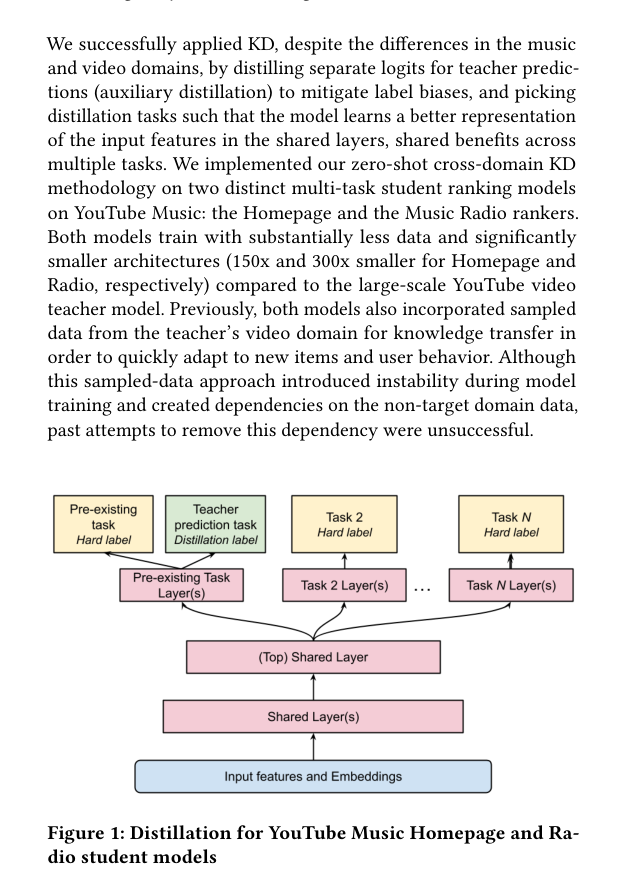
Figure 1: Overview of the paper's method and key components. From the original paper; copyright remains with the authors.
Core equation
\(L=L_{target}+\lambda T^2KL(softmax(z_T/T)\Vert softmax(z_S/T))+\gamma\|a_T-a_S\|^2\).
Paper results
CTR AUC 79.34→79.55 and trail engagement 0.312→0.320; online discovery +1.12% and new-releases engagement +11.39%.
Local reproduction
Local comparison: DIN trained on the same target split is the cross-model baseline. The KD student's NDCG@10 is -68.46% versus DIN. Distillation improves the target-only student by +3.02%; that is an increment over a weaker student, not a win over DIN.
180 source users and 60 target users, with 19,091 teacher parameters and 7,171 student parameters. On exactly the same target split, DIN Hit/NDCG is 0.1056/0.05518 and KD student is 0.0444/0.01741, or -68.46% relative NDCG. KD remains +3.02% above the target-only student, substantially behind DIN, while DIN has higher head share. See the metrics.