Causal representation learning: generalizable recommendation under distribution shift
Fidelity: core mechanism. Runs the defining mechanism verifiable on public data. Private data, production models, and serving remain outside scope.
Paper information
| Field | Details |
|---|---|
| Paper | arXiv 2605.27043 |
| Organization | University of Warwick |
| First public release | 2026-05-26 (arXiv v1) |
| Authors' code | No public author code was found on 2026-09-02. |
| Adapter / method | causal-representation |
| Local reproduction code | src/auto_research/reproductions/causal_representation/ |
Original paper
Motivation and method
Information-theoretic deconfounding keeps causal outcome-related components of candidate representations and removes noncausal components from the exposure policy. There is no extra online inference cost after training.
flowchart LR
  A["Public behavior and candidates"] --> B["Causal representation core mechanism"]
  B --> C["Matched-budget method output"]
  A --> D["Common direct baseline"]
  C --> E["Full-catalog ranking and structural diagnostics"]
  D --> E
Key figure from the paper
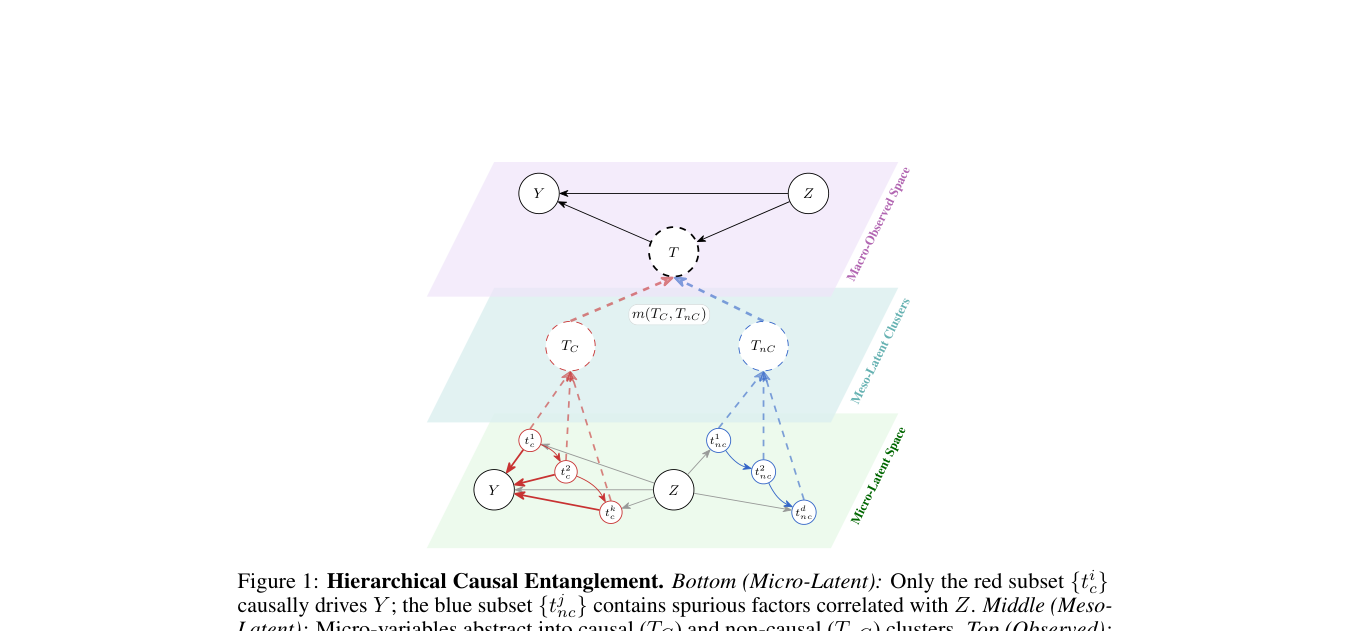
Figure 1: Overview of the paper's method and key components. From the original paper; copyright remains with the authors.
Core equations
Paper results
A two-week Spotify experiment with millions of users reports Track Streams +0.75%, Skips -0.61%, and Minutes Played +0.50%, all significant at 95%. This is paper evidence, not a local public-data outcome.
Local reproduction
Local comparison: Under the same full-catalog protocol, baseline NDCG@10 is 0.05401 and Causal representation NDCG@10 is 0.05220, -3.35% relative. The local proxy does not extrapolate to online lift.
See the three-seed artifact for complete results, means, standard deviations, and 95% confidence intervals.
Reproduction boundaries
The local run uses a public MovieLens-1M subset and auditable proxies to validate the core computation. It does not reproduce private logs, production models, online traffic assignment, or serving. No claim is made to reproduce absolute paper metrics or online gains.