Proximity Features: privacy-aware cohort features for cold start
Fidelity: core mechanism. Runs dense hash refinement, sparse fine-to-coarse clustering, stable proximity keys, cohort aggregation, and cold-start scoring.
Paper information
| Field | Details |
|---|---|
| Paper | arXiv 2607.12246 |
| Organization | Airbnb |
| First public release | 2026-07-14 (arXiv v1) |
| Authors' code | The paper did not provide official or author code when checked on 2026-08-09. |
| Adapter / method | proximity-features |
| Local reproduction code | src/auto_research/reproductions/proximity_features/ |
Original paper
Motivation and method
Anonymous users have no user ID. Airbnb clusters consented geo-IP population-center coordinates into proximity keys of about 1,000 users. Dense locations split by IP hash; sparse locations progressively merge at coarser geographic precision. Cohort behavior is aggregated daily by stable key without persistent personal identifiers online.
flowchart LR
  A[Consented geo-IP] --> B[Hash refinement for dense locations]
  A --> C[Progressively merge sparse locations]
  B --> D[Stable proximity key]
  C --> D
  D --> E[Cohort feature aggregation]
  E --> F[Anonymous cold-start ranking]
Key figure from the paper
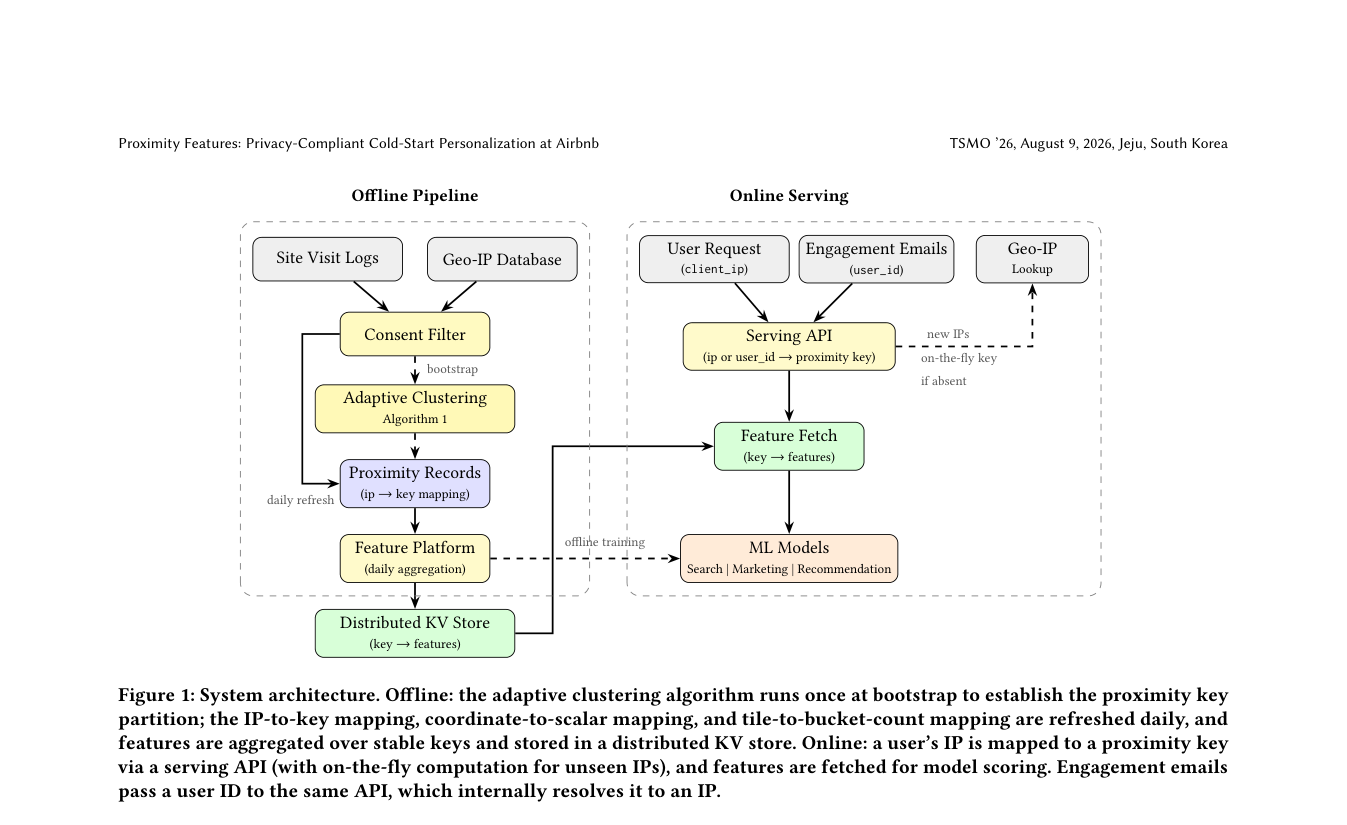
Figure 1: Core architecture, modules, and connections. From the original paper; copyright remains with the authors.
Core equations
Paper results
Marketing pages report global bookings +0.011% and first-time bookers +2.0%. AutoSuggest reports global bookings +0.16% and first-time bookings +0.33%.
Local reproduction
Local comparison: The baseline is a global cold-start aggregate. The treatment uses adaptive MovieLens ZIP proximity aggregation with validation-selected blend
1.0. Relative Hit@10 is +16.67% and NDCG@10 +22.91%.
The 932 users with ZIP data form 99 buckets, median size 10. Cohort signal beats the global aggregate using all original item features. See the stable metrics.
Reproduction boundaries
ZIP prefixes are not geo-IP coordinates. The threshold is reduced to 12 for algorithm validation; this does not establish the paper's roughly 1,000-user privacy guarantee.