DataOrchestra: Per-Example Orchestration of Pretraining Data Processing
Fidelity: core mechanism. Trains a per-example orchestrator, executes multi-operation routing, and pretrains again at equal budget. A programmatic teacher and small models replace the large LLM toolchain.
Paper information
| Field | Details |
|---|---|
| Paper | arXiv 2607.24717 |
| Organization | Fudan University / Shanghai Jiao Tong University / SII-GAIR |
| First public release | 2026-07-27 (arXiv v1) |
| Authors' code | Public author implementation. |
| Adapter / method | data-orchestra |
| Local reproduction code | src/auto_research/reproductions/data_orchestra/ |
Original paper
Motivation and method
Corpus-level cleaning can over-process clean text and apply the same transformation to unlike noise. DataOrchestra plans separately for each 1024-token chunk: choose Drop, Untouch, or Clean; for Clean, decide which of Noise Pruning (NP), Surface Rectification (SR), and Pedagogical Augmentation (PA) to execute in that order, and write chunk-specific rewrite instructions.
A strong teacher drafts a plan. Tool models execute it and a verifier checks the result. Failed rewrites can be corrected up to five times; stages are removed if they lose content or change too little. Verified (chunk, evolved plan) pairs supervise a 1.7B orchestrator so costly tools run only on examples that need them.
flowchart LR
  X[Raw pretraining chunk] --> O[Orchestrator]
  O --> D[Drop]
  O --> U[Untouch]
  O --> C[Clean plan]
  C --> NP[NP: remove noisy lines]
  NP --> SR[SR: repair surface or formatting]
  SR --> PA[PA: pedagogical augmentation]
  V[Teacher and verifier] --> C
  V --> NP
  V --> SR
  V --> PA
  U --> P[Pretraining corpus]
  PA --> P
Key figure from the paper
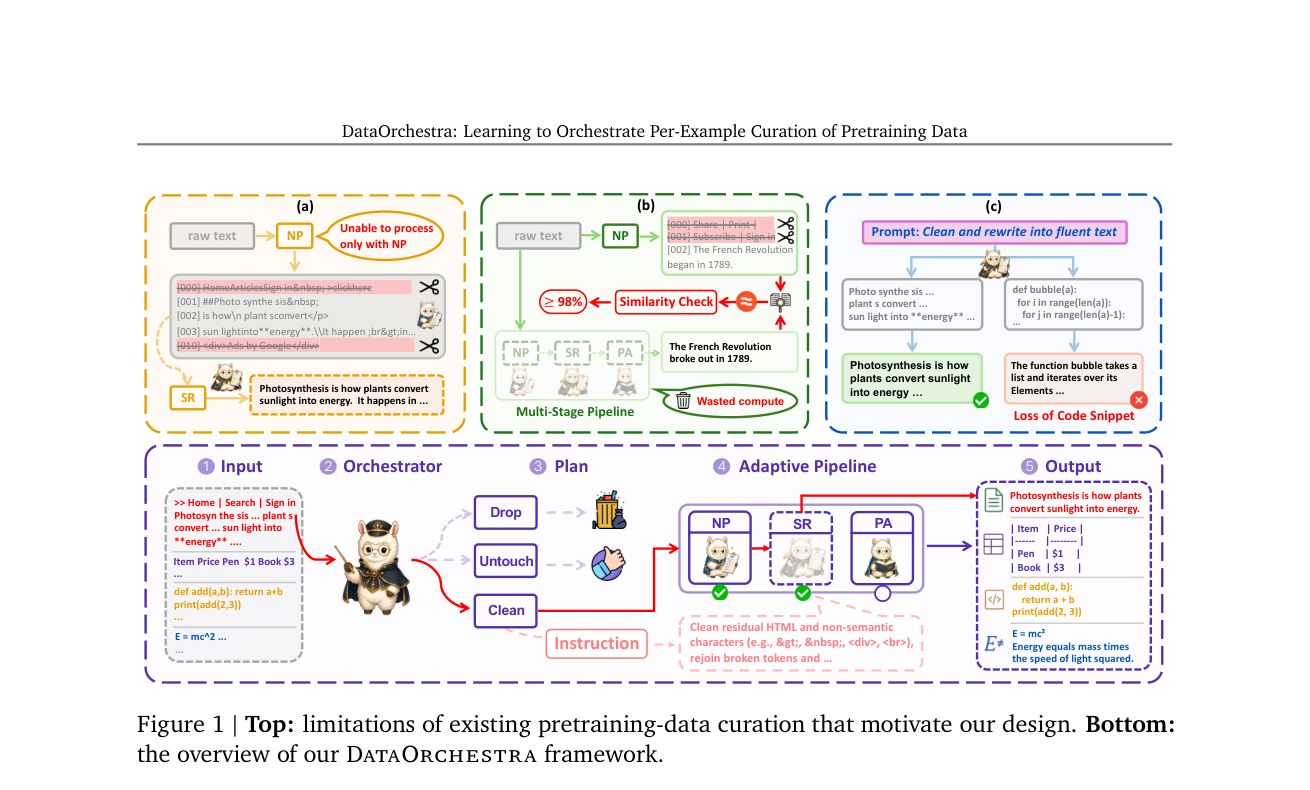
Figure 1: Core architecture, its modules, and their connections. From the original paper; copyright remains with the authors.
Core equations
The orchestrator learns each example's action and conditional operations:
Training uses teacher-forced SFT over serialized JSON plans. Processed corpus \(\mathcal D_\phi\) then trains a standard causal LM:
The objective is not to maximize cleaning rate, but to select a per-example Pareto point between downstream quality and processing compute. Drop and Untouch skip unnecessary NP/SR/PA.
Paper results
Models trained from scratch at 0.5B, 1.5B, and 7B improve their 11-benchmark mean from 37.63→39.99, 39.87→42.44, and 44.79→47.66, exceeding single-processing baselines such as ProX. The method generalizes to RedPajama-v2, DCLM-RefinedWeb, C4, FineWeb, and continued mathematical pretraining. Industrial online A/B criteria do not apply to this pretraining paper.
Local reproduction
Local comparison. The same 208,872-parameter Llama-style LM trains on raw WikiText-2 or on outputs of the trained orchestrator selecting Drop/Untouch/Clean and four local operations. Both use 150k tokens, 55 steps, and the same optimizer and model. Perplexity is 8.60% worse than raw but about 1.03% better than static cleaning.
| Variant | Final train loss | Test loss | Perplexity |
|---|---|---|---|
| Raw | 6.0638 | 5.8861 | 359.985 |
| Static cleaner | 6.0248 | 5.9790 | 395.036 |
| DataOrchestra | 6.0590 | 5.9686 | 390.954 |
Held-out action/operation accuracy is 76.11%/84.78%; routes exercise normalize, repair, deduplicate, and wiki. On already clean WikiText-2, the programmatic teacher still drops or cleans too much. Large heterogeneous web-corpus gains cannot be inferred from this negative result. See complete metrics.
Limits
An eight-feature MLP and programmatic rules replace Qwen3-235B teacher/verifier, Qwen3-1.7B orchestrator, 0.6B NP, and 4B SR/PA. Four deterministic edits replace natural-language chunk-specific rewrites; WikiText-2 replaces the 20B/30B-token corpora. This reproduces orchestration decisions and downstream pretraining mechanics, not the paper's data-quality scaling claims.