DART: Decoded Attention over Recurrent States for Efficient Long-Context Sequence Modeling
Core-mechanism mini-suite. The local NumPy experiment validates an isolatable algorithm path, not paper-scale training or online results.
Paper information
| Field | Details |
|---|---|
| Paper | arXiv 2608.02032 |
| Organization | Zhejiang University |
| First public release | 2026-08-03 (arXiv v1) |
| Authors' code | No public author code was found as of 2026-08-24. |
| Adapter / method | dart |
| Local reproduction code | src/auto_research/reproductions/dart/ |
| First author | Yixiao Qian |
Original paper
Motivation and method
Keep Mamba-2 chunk-state contributions, decode token-conditioned K/V, and run state-memory attention.
flowchart LR
  X[Fixed public mini-suite] --> B[Recent-window control]
  X --> M[DART core mechanism]
  B --> E[Same-example evaluation]
  M --> E
Key figure from the paper
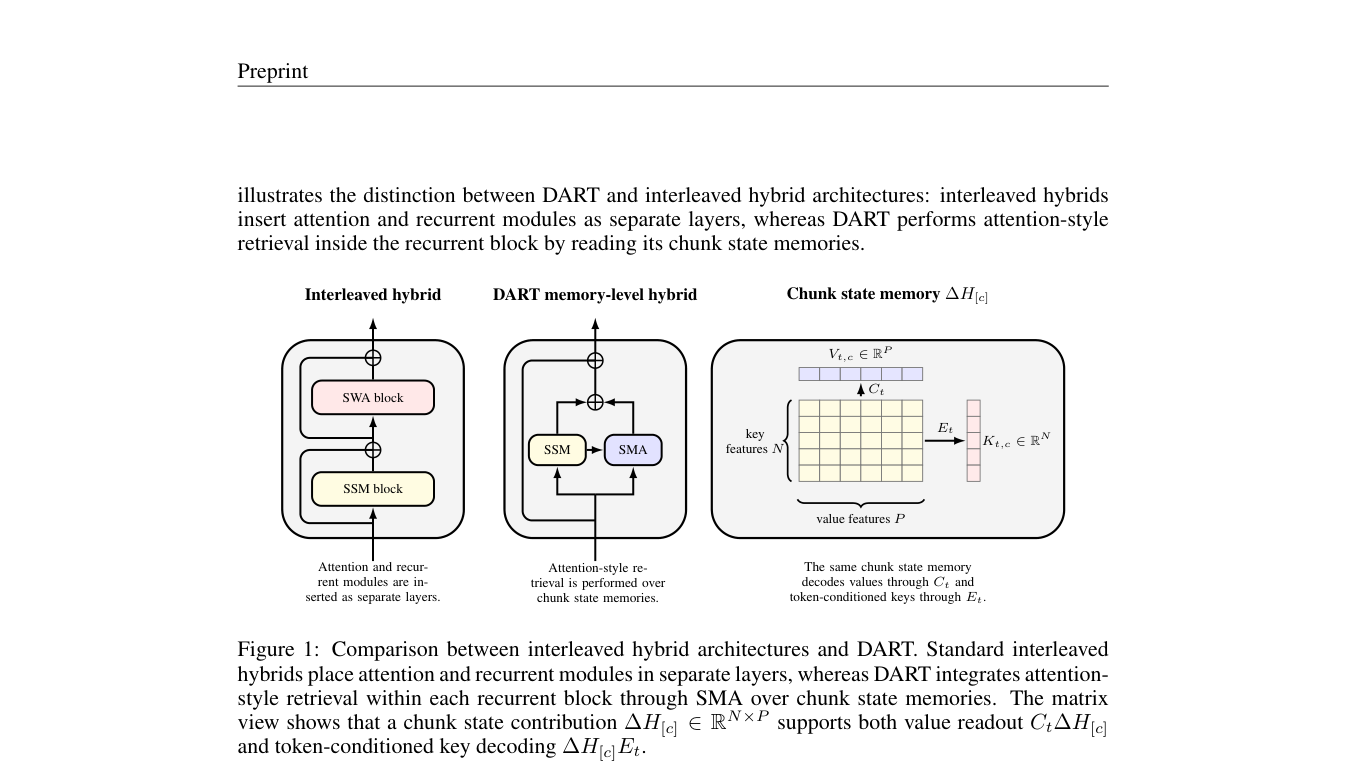
Figure 1: Core architecture, modules, and connections. From the original paper; copyright remains with the authors.
Core equation
Paper results
At chunk=256 and state=128, the paper reports 75% less length-dependent cache than a matched attention baseline. This is the paper's protocol; no local online uplift is inferred without industrial A/B.
Local reproduction
Local comparison: Same-example
recent-window attentionis the baseline anddartthe treatment; the single seed yields +3.12 percentage points.
On the same 64 examples and seed, recent-window attention accuracy is 0.0781 and DART is 0.1094, an absolute change of +3.12 percentage points. See the paper-specific metrics and batch index.
Reproduction boundaries
The local fixed long-context, multimodal, and evaluation mini-suite does not train paper-scale checkpoints, implement a custom CUDA kernel, or reproduce the full public benchmark. It checks execution of core data flow, equations, and relative computation.