AutoLR: From Research Ideas to Launch Review
Reproduction level: offline controller core. Applies budget ranking, independent metric gates, a persistent ledger, and human review packaging to submitted candidates and reviews. It does not perform live LLM literature research, arbitrary code generation, or production deployment.
Paper information
| Field | Details |
|---|---|
| Paper | NetEase technical report |
| Organization | NetEase, Inc. |
| First public release | 2026-09-04 (arXiv v1) |
| Authors' code | No official or author implementation is linked by the paper (checked 2026-09-07). |
| Adapter / method | autolr |
| Local reproduction code | src/auto_research/reproductions/autolr/ |
| Checkpoint experiment entry point | autolr_product.py |
Original paper
Motivation and method
AutoLR links literature review, proposal debate, implementation experiments, offline evaluation, A/B, and Launch Review in a durable state machine. An LLM reasons over proposals and generates code; a deterministic controller retains ownership of budgets, metric extraction, guardrails, and transitions so noisy wins do not compound through KEEP decisions.
flowchart LR
  Q[Research direction] --> M[Expert council]
  M --> S[Evidence-weighted selector]
  S --> E[Parallel offline experiments]
  E --> G{Deterministic promotion gate}
  G -->|Pass| A[Online A/B and Launch Review]
  G -->|Reject| K[Failure record and next round]
  K --> M
Key figure from the paper
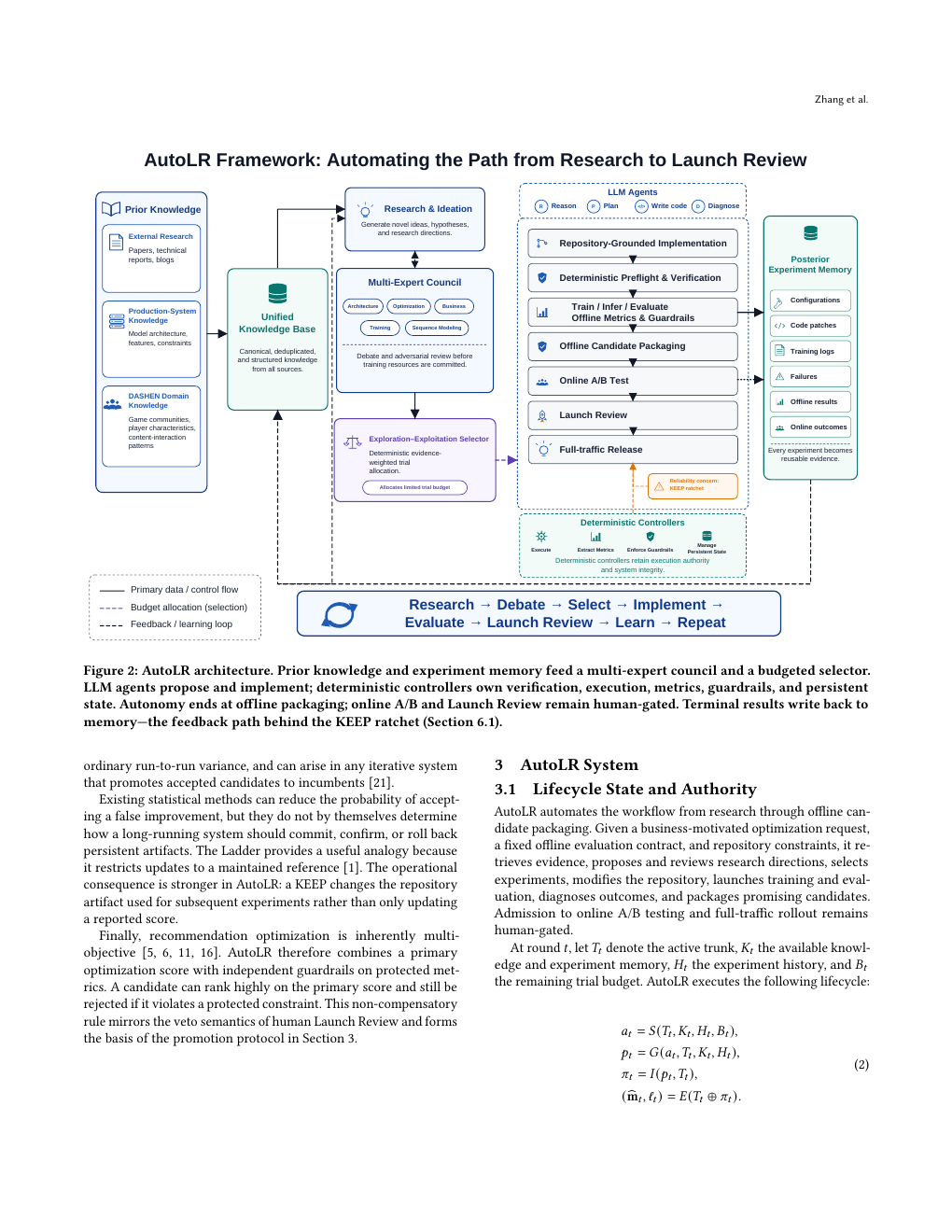
Figure 2: Research, debate, experiments, launch evidence, and human authority boundaries. From the original paper; copyright remains with the authors.
Core formula
Candidate \(i\) receives \(q_i=\lambda e_i+(1-\lambda)u_i-\gamma d_i\), balancing evidence \(e\), uncertainty or exploration value \(u\), and expert disagreement risk \(d\). Only gated evidence can change the durable incumbent.
Paper results
An audit of several months finds 1,586 completed offline evaluations and nine Launch Reviews. Descriptive sums of positive relative changes across heterogeneous records are +5.75% content-consumption penetration, +10.83% consumption duration, and +5.55% effective plays. The authors explicitly distinguish these from pooled treatment effects.
Local reproduction
A real Qwen checkpoint completes three bounded research rounds on public Amazon Beauty 2014 5-core. Each round generates a parameter proposal, calls two reviewers, verifies real backpropagation, and trains through validation. None beats the fixed baseline, which remains incumbent; test runs once at the end. See sanitized results and A100 execution receipt.
The 2026-09-09 correction invalidates old results from score mixing. In autolr_product.py, a real checkpoint generates two-tower dimension, learning rate, and Category Adapter proposals from research evidence and the executed-validation ledger. Separate model calls review fidelity and budget; a candidate must pass one backpropagation/finite-value check before full training at the fixed three-seed budget. Every round recovers its ledger from disk. Test runs only after final selection and online access is never granted.
reproduce("autolr", Path("data"), 42, ledger_path=Path("runs/autolr-ledger.json")) saves and restores the offline ledger. If no candidate qualifies, the baseline remains and no uplift is manufactured; online_authorized always remains false.
The MovieLens metrics record candidate selection, disagreement penalty, NDCG, and Recall for seeds 42/43/44.
Local comparison. Both sides use the same fixed budget. Relative NDCG/Recall changes are in the artifact and undefined for a zero baseline. Internal Launch Review is not simulated.
Limits
Production code and DASHEN data are unavailable. The model can only propose allowlisted parameters, not inject commands or arbitrary code. This is a controlled offline research loop, not a claim of autonomous architecture invention or online release authority.