Optimizing Effective Training Time for Large-Scale Recommendation Systems
L1 effective-training-time and owner attribution diagnostic. User-approved industrial training-infrastructure exception (2026-10-02); ETT is not online A/B or recommendation quality.
Paper information
| Field | Details |
|---|---|
| Paper | arXiv v1 |
| Institution | Meta Platforms, Inc. |
| First public release | 2026-10-01 (arXiv v1) |
| Author code | No public author implementation found as of 2026-10-02. |
| Local adapter or method key | effective-training-time |
| Local reproduction code | src/auto_research/reproductions/effective_training_time/ |
Paper method and evidence
Decompose wall time into useful training on new data versus lifecycle costs: initialization, compilation, checkpointing, publishing, and recovery. Attribute lost time by owner so it can be addressed.
flowchart LR
  W[End-to-end wall time] --> T[Useful training on new data]
  W --> L[Lifecycle losses]
  L --> O[Attribute by owner]
Original paper figure
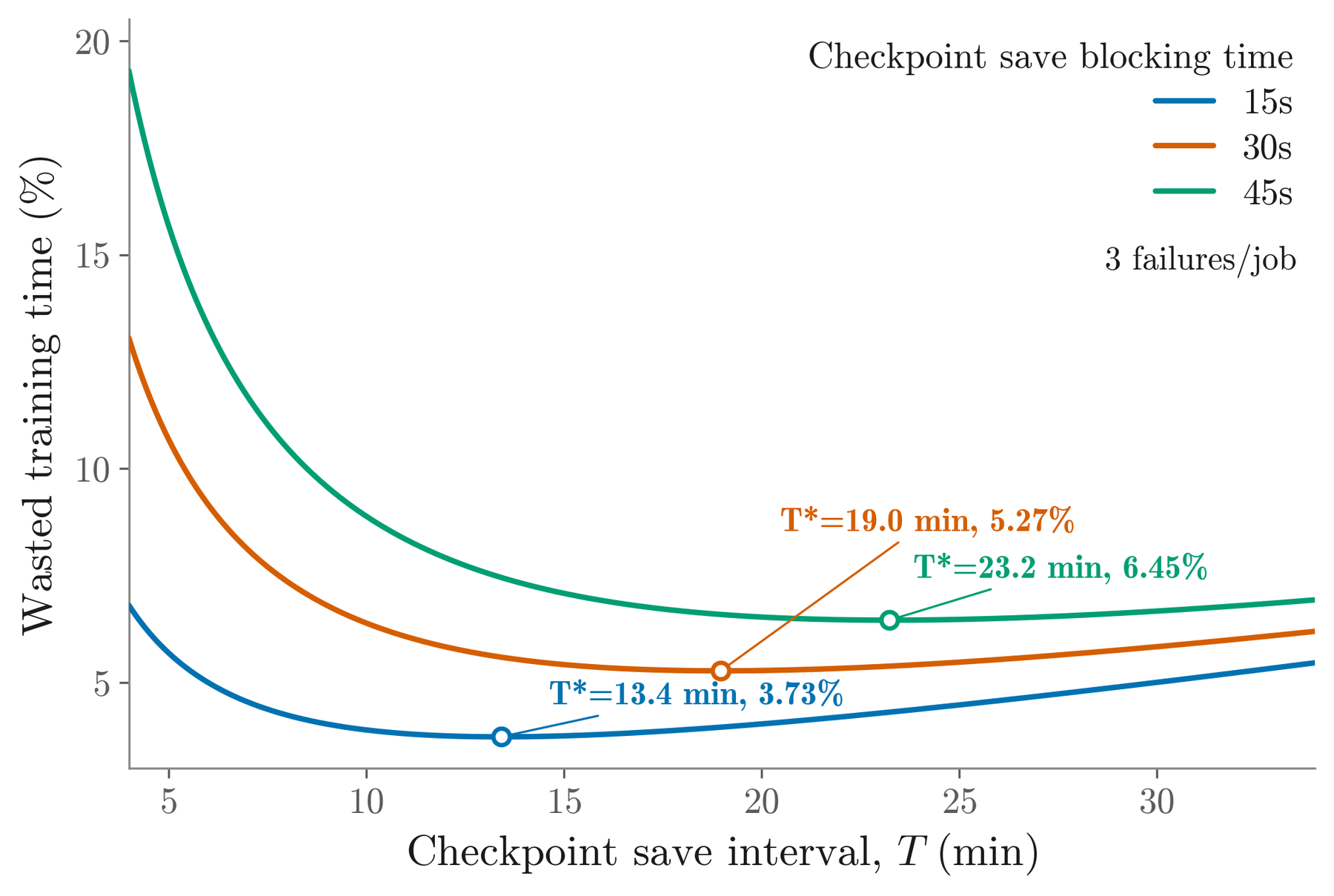
The original paper figure shows the infrastructure protocol. From the original paper; copyright remains with the authors.
Core equation
\(ETT=training\_on\_new\_data / wall\_time\).
Reported results
Representative models averaged 15.5% higher ETT, the largest workload reached 85%, and the deployed fleet rose from about 80% to above 90%. These measure infrastructure, not ranking lift.
Local reproduction
Compare with the corresponding operator disabled or in its default state. Three-seed metrics are diagnostic_only=true: they verify execution and invariants, not formal gains or capability ranking.