Jev capability evaluation: What finite-choice benchmarks do and do not establish
Finite-choice evaluation protocol with one real public-checkpoint run, not a reproduction of the paper's closed model.
Paper information
| Field | Details |
|---|---|
| Paper | arXiv 2610.11978 |
| Institution | Dalian Maritime University; Xing Li and Qingcheng Chang are co-first authors. |
| First public release | 2026-10-08 (arXiv v1) |
| Author code | No author code found as of 2026-10-10; TypeSafe Jev weights are not public. |
| Local adapter or method key | jev-capability, evaluation entry point, not a training algorithm. |
| Local reproduction code | src/auto_research/system_one/capability_bench.py, capability_data.py; runner scripts/run_jev_capability.py. |
Paper method and evidence
Evaluate knowledge, reasoning, and multilingual ability by sending only the question and options once. Math is weaker than knowledge in the paper. Keep vendor-reported and author-measured scores separate because prompting protocols differ; this is not a new architecture or objective.
flowchart LR
  D[Pinned public dataset] --> N[Normalize 13 schemas]
  N --> Q[Question and options only]
  Q --> P[Fixed decision backend]
  P --> S[Score choices]
  G[Isolated gold] --> S
  S --> C[Task and language coverage]
Original paper figure
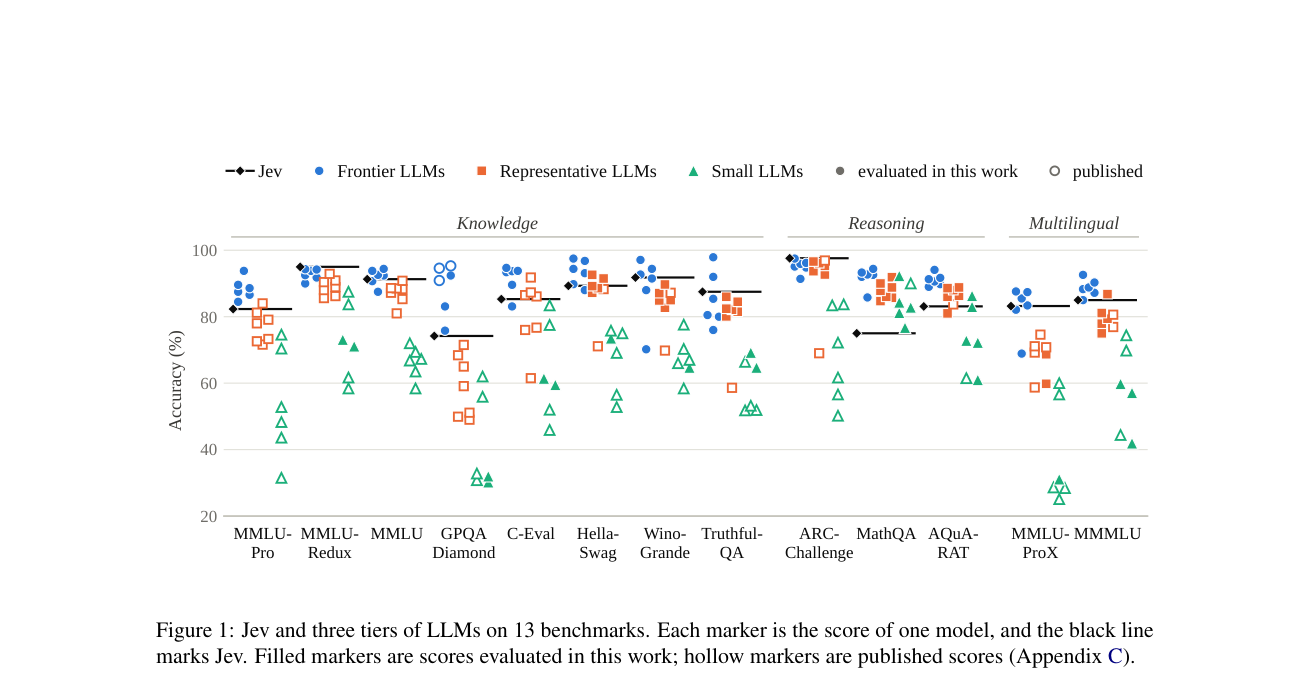
Figure 1: separate measured and reported evidence, not a unified ranking. From the original paper; copyright remains with the authors.
Core equation
Accuracy is correct selections divided by questions, with Wilson 95% intervals. Illegal choices are wrong, not retried. Multilingual reporting keeps language-macro and sample-weighted accuracy separate.
Reported results
The original Figure 1 compares closed Jev and three tiers of LLMs over 13 benchmarks; solid points are measured by the authors, hollow points are public reports under potentially different protocols. It is not the open NanoJev result.
Local reproduction
Supports MMLU-Pro, MMLU-Redux, MMLU, GPQA Diamond, C-Eval, HellaSwag, WinoGrande, TruthfulQA MC1, ARC-Challenge, MathQA, AQuA-RAT, MMLU-ProX, and MMMLU. capability_data.DATASETS lists official sources. Require complete 40-character revisions; execute no remote dataset Python. Record config, language, original split, normalized SHA-256, counts, and exclusions. Shuffle GPQA options deterministically rather than keeping correct choice at A. Apply explicit Redux correction indices and reject ambiguity or labels that cannot be mapped; this local cleanup may differ from the paper. Do not guess unlabelled C-Eval test answers; a labeled validation run remains source_split=validation. Require explicit languages and never call an English subset full 29/14-language coverage. Explanations, CoT, and gold are excluded from requests.
pip install -e '.[system-one-gpu]'
PYTHONPATH=src python scripts/run_jev_capability.py prepare \
  --benchmark arc-challenge --config ARC-Challenge --language en \
  --revision 210d026faf9955653af8916fad021475a3f00453 \
  --output data/system-one-capability/arc.jsonl
PYTHONPATH=src python scripts/run_jev_capability.py evaluate \
  --backend nanojev --checkpoint-dir checkpoints/nanojev --device cuda:0 \
  --data data/system-one-capability/arc.jsonl \
  --output runs/jev-capability/report.json
Pass multiple JSONL inputs with --data; each needs a generated .source.json. Use official config/language names. GPQA authentication failure is an error, not a proxy substitution. Closed Jev calls the live service only with explicit TYPESAFE_API_KEY and --backend typesafe; secrets are excluded. Fixed-temperature repeats do not count as independent seeds; no test tuning.
Tests cover all 13 schemas, option ordering, label isolation, hashes, and reported versus measured evidence. On 2026-10-10 a real A100 ran NanoJev once on all 1,172 official ARC-Challenge test items: 327 correct, 27.90%, Wilson 95% CI 25.41%–30.54%. No test training, tuning, or retries. Sanitized GPU receipt records revisions. This is not the paper's 97.6% closed Jev result. The other 12 tasks are unmeasured and listed under coverage.missing. No training or trainable Evolve operator.
Sources: full text, official ARC data, Redux corrections, TruthfulQA MC1.