简体中文 · English
Causal Memory Policy: Memory utility under retrieval interventions
L1 causal measurement protocol. Balanced randomized exposure, Hájek estimation and uncertainty-aware single-query decisions are implemented, not a validated long-term memory pruning policy.
Paper information
| Field | Details |
|---|---|
| Paper | arXiv 2610.02070 |
| Institution | Illinois Institute of Technology (first author Arman Behnam) |
| First public release | 2026-10-01 (arXiv v1) |
| Original source code | The paper links an anonymous release. Access failed during this review; upstream code was not run. |
| Adapter | causal-memory-policy (Python mechanism API) |
| Local reproduction code | src/auto_research/agent_research/causal_memory_policy.py |
Original paper summary
Background and main changes
Retrieved memories correlate with task difficulty, so pruning based directly on success or failure is biased. CMP reserves balanced randomized exposure slots in a fixed candidate pool. Each memory then has estimable treatment and control samples, and utility with a standard error protects uncertain memories.
flowchart LR
  P[Fixed candidate memory pool P] --> B[Balanced random exposure in k slots per retrieval]
  B --> O[Actual agent execution and external outcomes]
  O --> H[Exposed versus unexposed mean and standard error]
  H --> G[Risk-asymmetric Gaussian decision]
  G --> F[Forget or noop]
Key figure from the paper
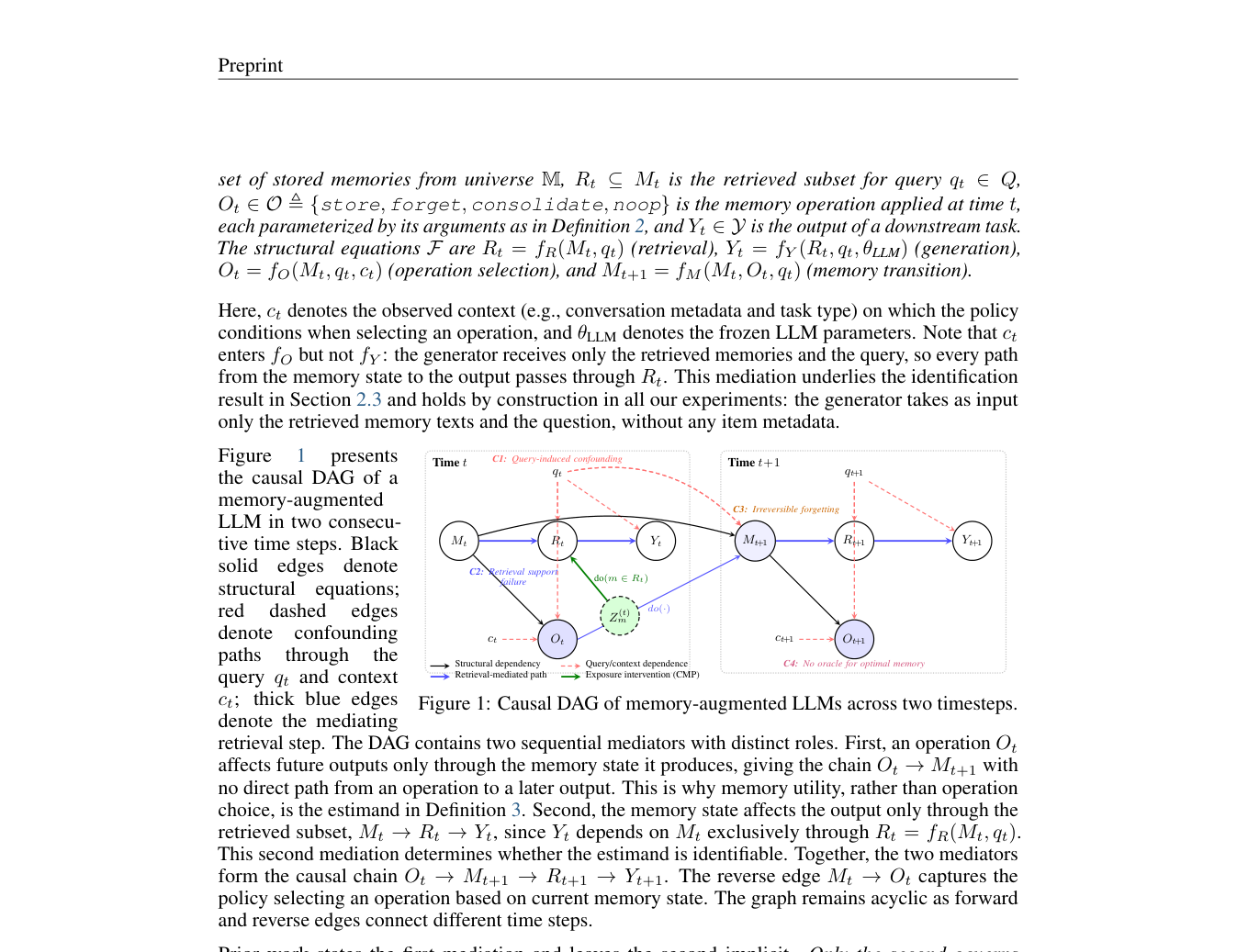
Figure 1: Overall design and components. From the paper; copyright belongs to the authors. Click for the source.
Core equations
The balanced design has \(k\) exposures in each row and \(\lfloor Tk/P\rfloor\) or \(\lceil Tk/P\rceil\) in each column. \(\hat\tau=\bar Y_{Z=1}-\bar Y_{Z=0}\), \(SE=\sqrt{s_1^2/n_1+s_0^2/n_0}\).
Forget only when \(g_\lambda(z)<0\). Insufficient support rejects estimation; infinite uncertainty returns noop. Fixed slots mean that exposing one memory changes the distribution of other memories. The estimate is a net effect under this exposure design, not an independent additive coefficient.
Offline and online results
The paper focuses on identifiable per-query utility and the cost of mistaken deletion, not memory retention across queries, candidate-pool selection or long-term policy. No production A/B is reported.
Local reproduction
PYTHONPATH=src python scripts/run_oct04_seven_papers.py uses 12 memories, 600 retrievals and 2 slots each, with synthetic external outcomes for three seeds. Every memory is exposed exactly 100 times. The artifact retains positive and negative utilities, standard errors and forget decisions.
balanced_exposure builds a degree-constrained design before random permutation and edge swaps. estimate_utility requires at least two observations per arm. The design requires a fixed pool and known randomization; ordinary production observation logs cannot substitute for randomized experiments.
Scope
Real LLM retrieval and cross-query memory deletion were not run. Recovery of synthetic utilities is not agent answer accuracy and does not enter capability rankings or Evolve promotion evidence.